
Sham surgery is just as effective as an arthroscopic partial meniscectomy in diminishing knee pain.
Sham Surgery as Good as Partial Meniscectomy
2 min read Premium comments
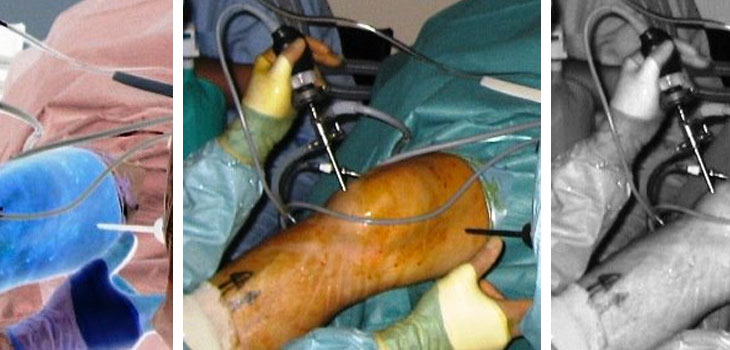
Secondary
That’s the result of a trial from the University of Helsinki, Finland involving 146 patients reported in the December 16, 2013 issue of the New England Journal of Medicine (NEJM). None of the patients had knee osteoarthritis but had symptoms of a degenerative medial meniscus tear. The outcomes after arthroscopic partial meniscectomy were no better than those after a sham surgical procedure.
The experiment involved volunteers whose knee pain appeared to be caused by wear and tear of the meniscus. After 12 months, the average improvement among the people who received real surgery and those who got the sham surgery was essentially the same, reported the research team, and led by Teppo Jarvinen, M.D., Ph.D.
There was no significant improvement in knee pain after exercise and no sizable improvement in the likelihood that a patient would require subsequent knee surgery.
However, according to Craig Bennett, M.D., chief of sports medicine at the University of Maryland Medical Center, the findings should not be over-generalized. One problem, he told Reuters Health in a telephone interview, is that sham surgery is, in fact, a surgical procedure with potential benefit.
People with knee pain who seem to be candidates for meniscal repair may be suffering because of debris in a swollen knee joint. “If you scope the knee (without touching the cushion), that will often help even if you don’t completely address the torn meniscus issue, ” he said.
The researchers conducted a multicenter, randomized, double-blind, sham-controlled trial in the patients 35 to 65 years of age who had knee symptoms consistent with a degenerative medial meniscus tear and no knee osteoarthritis. Patients were randomly assigned to arthroscopic partial meniscectomy or sham surgery.
The primary outcomes were changes in the Lysholm and Western Ontario Meniscal Evaluation Tool (WOMET) scores (each ranging from 0 to 100, with lower scores indicating more severe symptoms) and in knee pain after exercise (rated on a scale from 0 to 10, with 0 denoting no pain) at 12 months after the procedure.
In the intention-to-treat analysis, according to the NEJM article, there were no significant between-group differences in the change from baseline to 12 months in any primary outcome. The mean changes (improvements) in the primary outcome measures were as follows:
- Lysholm score, 21.7 points in the partial-meniscectomy group as compared with 23.3 points in the sham-surgery group (between-group difference, −1.6 points; 95% confidence interval [CI], −7.2 to 4.0);
- WOMET score, 24.6 and 27.1 points, respectively (between-group difference, −2.5 points; 95% CI, −9.2 to 4.1); and score for knee pain after exercise, 3.1 and 3.3 points, respectively (between-group difference, −0.1; 95% CI, −0.9 to 0.7).
There were no significant differences between groups in the number of patients who required subsequent knee surgery (two in the partial-meniscectomy group and five in the sham-surgery group) or serious adverse events (one and zero, respectively).
Because about 700, 000 such surgeries are done in the U.S. each year at a cost of $4 billion, the new findings “will not be welcomed with open arms, ” Dr. Jarvinen predicted in a phone interview reported by Reuters.
Author
React:
Discussion
This is a fascinating development. In my practice we've seen similar outcomes with the revised protocol. The key differentiator seems to be patient selection criteria. Has anyone else noticed the correlation with BMI thresholds?
Great point. I'd push back slightly on the conclusion, the sample size in the cited study is too small to draw population-level inferences. That said, the directional signal is compelling and worth a larger RCT.
We implemented a similar approach last year. Early results are promising but we're still gathering 12-month follow-up data. Happy to share our protocol if anyone is interested.
Join the conversation
Orthopedic professionals are discussing this. Sign in and upgrade to read every comment and add your voice.