
NuVasive, Inc. has launched its ALIF ACR in the U.S.
NuVasive Launches Sagittal Plane Imbalance Solution in U.S.
1 min read Premium comments
Secondary
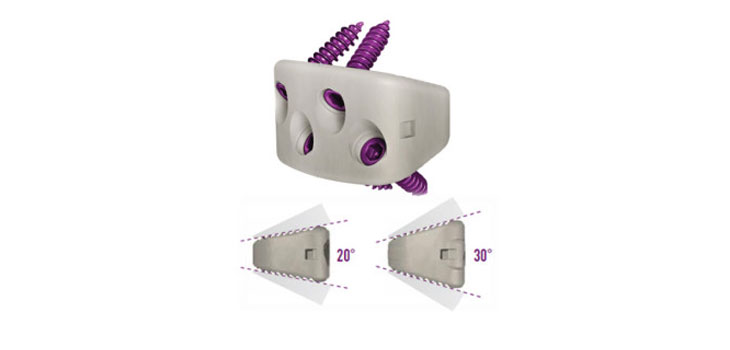
The Anterior Lumbar Interbody Fusion -Anterior Column Realignment (ALIF ACR) focuses on correcting the sagittal plane imbalance that results from advanced degeneration. The December 17, 2013 company announcement stated that the product offers surgeons a “familiar ALIF technique to increase alignment where 80% of sagittal balance exists; between L4 and S1.” The device is designed to achieve the same correction capabilities as traditional techniques, while providing the benefits associated with less invasive anterior approaches.
A “Significant” Advancement
Chris Shaffrey, M.D. said, “The ability to restore natural lumbar lordosis of 50 to 60 degrees through a two-level ALIF ACR procedure without requiring a posterior osteotomy represents a significant advancement in spinal deformity correction.”
According to the company, typical ALIF implants only offer 8 to 15 degrees of lordosis, which presents a challenge when attempting to restore natural lumbar lordosis. The implants developed for the ALIF ACR procedure offer a 20-degree and 30-degree hyperlordotic footprints and may improve sagittal balance restoration capabilities.
“Influenced by the initial success of XLIF ACR, ALIF ACR provides a procedurally integrated solution to restore the natural anterior column while increasing foraminal height in the lower levels of the lumbar spine, ” said Pat Miles, President of Global Products and Services. “Our efforts to address sagittal imbalance with unique techniques demonstrate NuVasive’s continued commitment to changing spine surgery with innovation.”
Sagittal Imbalance Treatment
Traditional sagittal plane deformity correction techniques are often associated with significant morbidity, prolonged operative times, neurological complications, and blood loss. The company believes the ALIF ACR procedure is an alternative method of treating sagittal imbalance from the anterior column, and may provide the same correction capability with decreased complications and morbidity. “The surgical goal of an ALIF is to restore and maintain natural disc space and posterior foraminal height, indirectly decompress the neural elements, and introduce or restore proper sagittal and coronal alignment of the spinal column, ” continued the company statement.
Author
React:
Discussion
This is a fascinating development. In my practice we've seen similar outcomes with the revised protocol. The key differentiator seems to be patient selection criteria. Has anyone else noticed the correlation with BMI thresholds?
Great point. I'd push back slightly on the conclusion, the sample size in the cited study is too small to draw population-level inferences. That said, the directional signal is compelling and worth a larger RCT.
We implemented a similar approach last year. Early results are promising but we're still gathering 12-month follow-up data. Happy to share our protocol if anyone is interested.
Join the conversation
Orthopedic professionals are discussing this. Sign in and upgrade to read every comment and add your voice.