
The Department of Radiology & Imaging at Hospital for Special Surgery (HSS) has announced that Hollis G. Potter, M.D. as its new Chairman. Dr. Potter, who has been with HSS for 22 years, succeeds Helene Pavlov, M.D. In her new role, Dr. Potter will lead a team of 250 physicians, researchers and specialists.
Hollis Potter, M.D. Named Chair at HSS
2 min read Premium comments
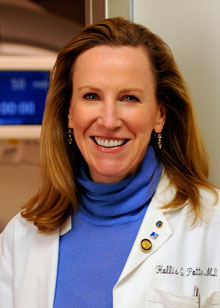
“As HSS continues to move forward, we are very cognitive of the role Radiology & Imaging plays in driving efficiency and accuracy in musculoskeletal medicine, ” said Louis A. Shapiro, president and CEO, Hospital for Special Surgery, in the December 17, 2013 news release. “Dr. Potter is an outstanding clinician, scientist and educator with unique expertise and proven success in this field making her ideal for advancing our ongoing commitment to this service.”
According to Dr. Potter, many MRI and CT imaging protocols and ultrasound procedures considered routine at HSS are rarely done, if at all, at other institutions. In many instances, HSS patients and physicians have access to technological breakthroughs which are largely unavailable to the general public.
“We are one of the major clinical and scientific collaborators in orthopaedic applications for General Electric, as well as several additional companies, and collectively, we are constantly innovating and implementing new techniques and equipment, ” she explained. “In addition, our research imaging scientists are responsible for many of the most significant developments in radiology and imaging in the last ten years. Our teams are constantly optimizing the ability to image the earliest signs of a musculoskeletal condition, disease progression and/or healing.”
The Department includes The Coleman Center for Musculoskeletal MRI. Approximately 30, 000 musculoskeletal MRI examinations of the axial and appendicular skeleton, including peripheral MR angiography, are currently performed on 11 high field strength units including 1.5T and 3T units. Many prototype MRI pulse sequences have been developed in collaboration with Dr. Potter and Dr. Matthew Koff, who is a research scientist and associate director of the MRI laboratory.
Dr. Potter told OTW, “The initial steps will be to incorporate all facets of the department (radiographs, CT, MRI and ultrasound) into the integrated care program provided at HSS. Based on the translational research performed in our research laboratory, will provide innovative diagnostic imaging solutions to the most complex orthopaedic and rheumatologic conditions. Accurate, comprehensive imaging thus obviates the need for diagnostic surgery and preserves surgery as a therapeutic tool. My goal, along with my colleagues at HSS, is to provide imaging solutions for many of the remaining unanswered questions regarding orthopaedic conditions.”
React:
Discussion
This is a fascinating development. In my practice we've seen similar outcomes with the revised protocol. The key differentiator seems to be patient selection criteria. Has anyone else noticed the correlation with BMI thresholds?
Great point. I'd push back slightly on the conclusion, the sample size in the cited study is too small to draw population-level inferences. That said, the directional signal is compelling and worth a larger RCT.
We implemented a similar approach last year. Early results are promising but we're still gathering 12-month follow-up data. Happy to share our protocol if anyone is interested.
Join the conversation
Orthopedic professionals are discussing this. Sign in and upgrade to read every comment and add your voice.