
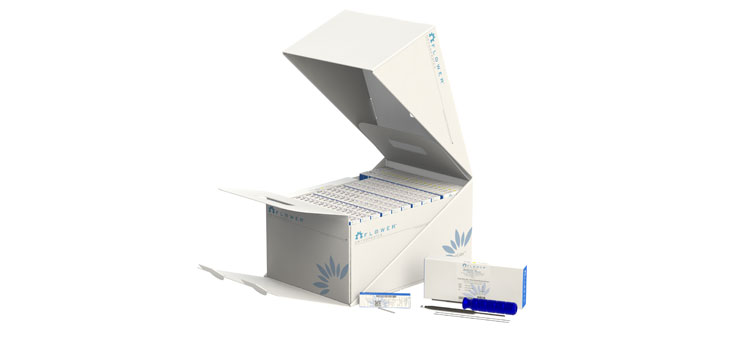
Flower Orthopedics, innovator of the FlowerCube and Ready-for-Surgery bone fixation concept, is pleased to announce the addition of the Cannulated Screw and Foot Plate FlowerCubes to their product portfolio.
Flower Orthopedics Adds Cannulated Screw, Foot Plates
1 min read Premium comments
Secondary
Flower offers now a comprehensive forefoot and midfoot plating portfolio. Incorporating 2.7mm and 3.0mm screw diameters, the low-profile plates supply anatomy-based solutions for the myriad of forefoot and midfoot injuries.
Additionally, the Cannulated Screw portfolio offers a range of lengths and diameters in fully threaded and partially threaded options for fractures, osteotomies and joint fusions. Tailored to specific surgical indications, the Cannulated Screw FlowerCubes contain all of the requisite implants and instruments for a procedure including: Cannulated Screws, Guide Wire Kits, Cannulated Drill Bits, Washers and Countersinks.
Oliver Burckhardt, president and CEO of Flower Orthopedics, told OTW, “We are excited to add these important products to our FlowerCube portfolio. We continue to execute on our strategy to have a Cube portfolio available that covers the majority of bone fixation surgeries and that stays true to our strategic approach to have all you need for surgery housed in the Cube.”
The Flower Orthopedics iPad Application offers a virtual look inside of the FlowerCube showing the cube contents and layout prior to ordering. Product specialists are able to configure custom FlowerCubes, as well as order standard pre-built cubes.
An exclusive distribution partner, McKesson Medical-Surgical Inc., based in Richmond, Virginia is now offering Hand, Wrist, First Ray, Forearm, Cannulated Screw and Midfoot FlowerCubes to surgery center customers.
React:
Discussion
This is a fascinating development. In my practice we've seen similar outcomes with the revised protocol. The key differentiator seems to be patient selection criteria. Has anyone else noticed the correlation with BMI thresholds?
Great point. I'd push back slightly on the conclusion, the sample size in the cited study is too small to draw population-level inferences. That said, the directional signal is compelling and worth a larger RCT.
We implemented a similar approach last year. Early results are promising but we're still gathering 12-month follow-up data. Happy to share our protocol if anyone is interested.
Join the conversation
Orthopedic professionals are discussing this. Sign in and upgrade to read every comment and add your voice.