
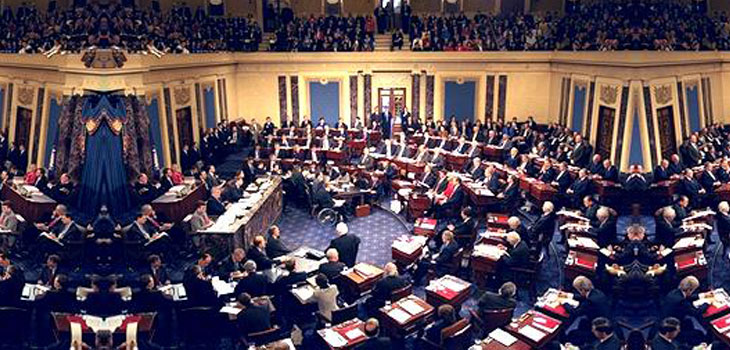
A federal budget bill including a 3-month SGR (sustainable growth rate) “patch” and a non-binding repeal of the 2.3% medical device tax was passed by the U.S. Senate on December 18, 2013. The House of Representatives passed the bill a few days earlier. When the bill gets to the President, he has reportedly agreed to sign the measure. More on the device tax below.
Doc Fix and Device Tax Legislation Passed by Congress
2 min read Premium comments
Secondary
Doc Fix
The budget legislation delays a 24% cut to physicians’ Medicare payments scheduled to take effect January 1, 2014. Physicians will get a 0.5% raise for the first three months of 2014. However, the bill both preserves an annual 2% reduction to Medicare rates called for by the across-the-board budget cuts called sequestration and extends it two years beyond its original expiration date of 2021.
SGR Replacement Proposal
The SGR “patch” gives politicians time to try to work out a deal to scrap the SGR altogether. Two similar bipartisan bills have been introduced in the Senate and the House to repeal the SGR.
David Pittman, Washington Correspondent for MedPage Today reported on December 18, 2013, that both measures would shift compensation from fee-for-service to pay-for-performance and consolidate three Medicare incentive programs, including meaningful use of electronic health records, into a single program.
The Senate Finance Committee and the House Ways and Means Committee each approved its version of SGR repeal last week. Pittman reports that The American Medical Association (AMA) and other medical societies prefer the House bill because it gives physicians an annual Medicare update, or raise, of 0.5% from 2014 through 2016. In contrast, the Senate bill freezes Medicare rates at their current levels for 10 years.
A Medicare rate increase makes any SGR repeal bill more costly. Pittman wrote that the Congressional Budget Office (CBO) recently put the cost of repealing the SGR formula and freezing rates for 10 years at $116.5 billion. The price tag would increase by additional $19.6 billion if physicians received an annual 0.5% raise for 10 years, according to the CBO. So over the course of three years, an annual 0.5% raise would send the cost to easily more than $120 billion.
Possible Device Tax Repeal
Stewart Eisenhart of the Emergo Group told OTW that the legislation passed by the Senate is the exact same bill passed by the House and includes the language to repeal the device tax. The President has reportedly said he intends to sign the bipartisan budget bill.
The budget deal includes language from a non-binding Senate vote to repeal the medical device tax that removes a hurdle to rolling back the tax.
AdvaMed President & CEO Stephen Ubl said AdvaMed is “encouraged that the budget deal preserves language from the Senate Budget Resolution calling for repeal of the medical device tax. We look forward to working with lawmakers on both sides of the aisle moving forward to achieve repeal of this tax.”
J.C. Scott, AdvaMed’s senior executive vice president for government affairs told MassDevice.com that the move makes it easier to find ways to replace the revenue that would be lost if the 2.3% levy on U.S. medical device sales is lifted.
“The practical effect is that Senate rules say if you repeal a tax you have to replace it with new tax revenues. This means they could look to other areas besides new taxes [to replace those revenues], ” Scott explained. “There continues to be bipartisan support for repealing the tax.”
Author
React:
Discussion
This is a fascinating development. In my practice we've seen similar outcomes with the revised protocol. The key differentiator seems to be patient selection criteria. Has anyone else noticed the correlation with BMI thresholds?
Great point. I'd push back slightly on the conclusion, the sample size in the cited study is too small to draw population-level inferences. That said, the directional signal is compelling and worth a larger RCT.
We implemented a similar approach last year. Early results are promising but we're still gathering 12-month follow-up data. Happy to share our protocol if anyone is interested.
Join the conversation
Orthopedic professionals are discussing this. Sign in and upgrade to read every comment and add your voice.