
Stonehill College has announced that it is partnering with Brigham and Women’s Hospital (BWH) to provide sports medicine services for its 450 student-athletes. Elizabeth G. Matzkin, M.D., a sports medicine specialist in the Department of Orthopedics at BWH, will serve as the team physician, with supporting coverage from other orthopedic experts from BWH through its Health Care Center.
Brigham and Women’s Hospital Partners With Stonehill College
1 min read Premium comments
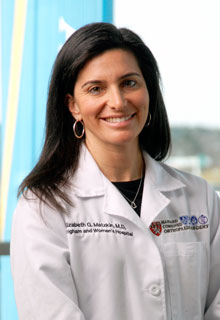
“We are committed to providing our student-athletes with the highest quality of medical attention and are thrilled to be partnering with Brigham and Women’s Hospital to provide this care, ” said Brendan Sullivan, Director of Intercollegiate Athletics at Stonehill, in the November 26, 2013 news release.
BWH will provide coverage for all Stonehill home football and ice hockey games and an orthopedic specialist is available 24/7 for student-athletes. Additionally, BWH specialists host a training clinic at the Stonehill campus every Sunday morning.
“Student-athletes have unique needs and we are excited about the opportunity to work with the Stonehill College Skyhawks and streamline their medical care through this partnership, ” said Dr. Matzkin.
Dr. Matzkin told OTW, “It’s been a great first season working with the Skyhawks community. I look forward to our continued relationship and working closely alongside the athletic department leadership, the coaches, the athletic trainers and the student-athletes at Stonehill to streamline their medical care and provide access to our services and experts at Brigham and Women’s Hospital. It’s certainly a team effort and we hope things will continue to evolve positively for all those involved.”
React:
Discussion
This is a fascinating development. In my practice we've seen similar outcomes with the revised protocol. The key differentiator seems to be patient selection criteria. Has anyone else noticed the correlation with BMI thresholds?
Great point. I'd push back slightly on the conclusion, the sample size in the cited study is too small to draw population-level inferences. That said, the directional signal is compelling and worth a larger RCT.
We implemented a similar approach last year. Early results are promising but we're still gathering 12-month follow-up data. Happy to share our protocol if anyone is interested.
Join the conversation
Orthopedic professionals are discussing this. Sign in and upgrade to read every comment and add your voice.