
The FDA has zipped Aurora Spine Corporation’s interspinous fusion system through the 510(k) clearance process.
Aurora’s ZIP Passes FDA 510(k) Clearance
1 min read Premium comments
Secondary
The company announced on December 3, 2013, that the agency granted clearance for the ZIP Minimally Invasive Interspinous Fusion System. The system was developed as an alternative to pedicle screw systems.
The system has been launched in Europe and already used in 40 surgeries. The company intends to immediately launch the system in the U.S. where there are more than 35 distribution agreements in place.
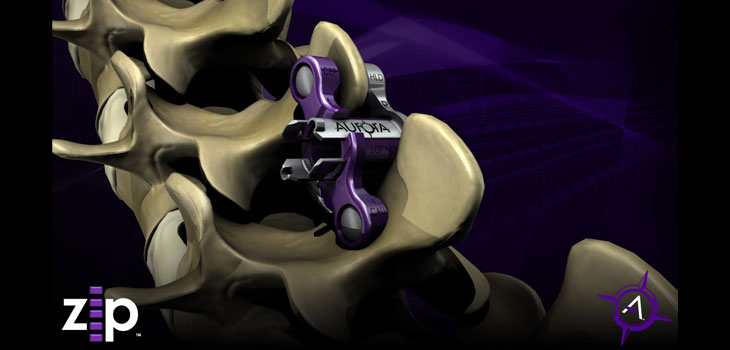
According to the company announcement, the ZIP features articulating bone anchors, a one-step locking mechanism with no set screw and a large graft space designed for biologic material.
Indications for use in the company’s 510(k) filing state that the ZIP is “a posterior, non-pedicle supplemental fixation device, intended for use at single level in the non-cervical spine (T1-S1). It is intended for plate fixation/attachment to the spinous process for the purpose of achieving supplemental fusion in the following conditions: degenerative disc disease (defined as back pain of discogenic origin with degeneration of the disc confirmed by history and radiographic studies0, spondylolisthesis, trauma (i.e, . fracture or dislocation), and/or tumor.”
The device is intended for use with bone graft material and is not intended for stand-alone use. The device is available in various sizes to accommodate different patient anatomy.
Author
React:
Discussion
This is a fascinating development. In my practice we've seen similar outcomes with the revised protocol. The key differentiator seems to be patient selection criteria. Has anyone else noticed the correlation with BMI thresholds?
Great point. I'd push back slightly on the conclusion, the sample size in the cited study is too small to draw population-level inferences. That said, the directional signal is compelling and worth a larger RCT.
We implemented a similar approach last year. Early results are promising but we're still gathering 12-month follow-up data. Happy to share our protocol if anyone is interested.
Join the conversation
Orthopedic professionals are discussing this. Sign in and upgrade to read every comment and add your voice.