
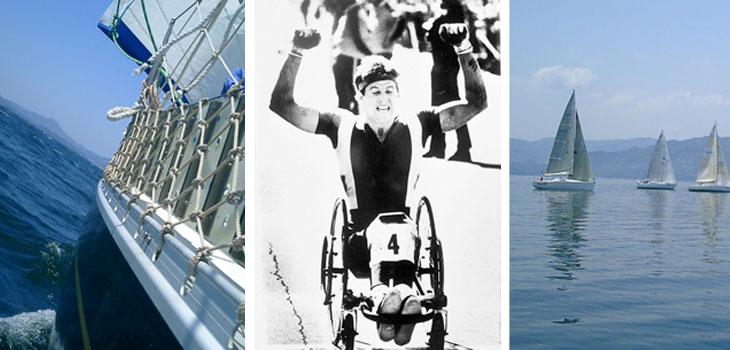
Researchers from the Kennedy Krieger Institute have announced the results of a pilot study demonstrating that use of a virtual therapeutic sailing simulator is an important part of rehabilitation following a spinal cord injury (SCI). While this study involved only people with SCI, the authors indicate the possibility that this approach may be used with people with a wide range of injuries including loss of limbs and brain injury.
Sailing as Rehab for Spinal Cord Injury Patients
2 min read Premium comments
Secondary
The study, supported by Kennedy Krieger Institute’s International Center for Spinal Cord Injury, the Johns Hopkins University and the University of Melbourne, Australia. This work, published in the American Journal of Physical Medicine & Rehabilitation, found that using a hands-on sailing simulator over a 12-week period helped participants safely learn sailing skills in a controlled environment, ultimately improving their quality of life by gaining the ability to participate in a recreational sport.
According to the authors, this study is one of the first to scientifically quantify the positive impact of therapeutic sailing following a spinal cord injury, including a significant increase in overall self-confidence and sense of accomplishment among participants.
“Sports and recreation are a very important component of the rehabilitation process, not only for general physical well-being, but for improving overall quality of life for patients who have sustained spinal cord injuries, ” says Dr. Albert Recio, study author and physician in the International Center for Spinal Cord Injury at Kennedy Krieger Institute, in the November 20, 2013 news release. “We are very pleased with the results of this unique training program and hope that this type of recreational tool can also help in the rehabilitation of patients with other disabilities.”
Study participants had chronic spinal cord injuries that occurred more than six months prior to beginning use of the Virtual Sailing VSail-Trainer, the first sailing simulator available for people with paralysis. The stationary, motorized sailboat cockpit features specialized software that enables patients to navigate the boat around a virtual course in the same way as an actual sailboat in the water. Electronic sensors give the participant real-time feedback that matches their movements and allows them to control wind strength and water conditions.
During each session, a therapist assessed several physical and neurological indicators and compared the results to measurements taken prior to beginning the training program. All participants completed a questionnaire at the beginning and end of the study designed to evaluate their quality of life and self-esteem.
The results showed that all patients showed a significant positive increase in overall quality of life, including increased self-confidence and sense of accomplishment. Following completion of the training program, all subjects were able to successfully sail and perform specific maneuvers on the water at a sailing center in Baltimore, Maryland. And importantly, the subjects were able to participate in a sports activity with their respective family members and experienced a sense of optimism about the future.
Author
React:
Discussion
This is a fascinating development. In my practice we've seen similar outcomes with the revised protocol. The key differentiator seems to be patient selection criteria. Has anyone else noticed the correlation with BMI thresholds?
Great point. I'd push back slightly on the conclusion, the sample size in the cited study is too small to draw population-level inferences. That said, the directional signal is compelling and worth a larger RCT.
We implemented a similar approach last year. Early results are promising but we're still gathering 12-month follow-up data. Happy to share our protocol if anyone is interested.
Join the conversation
Orthopedic professionals are discussing this. Sign in and upgrade to read every comment and add your voice.