
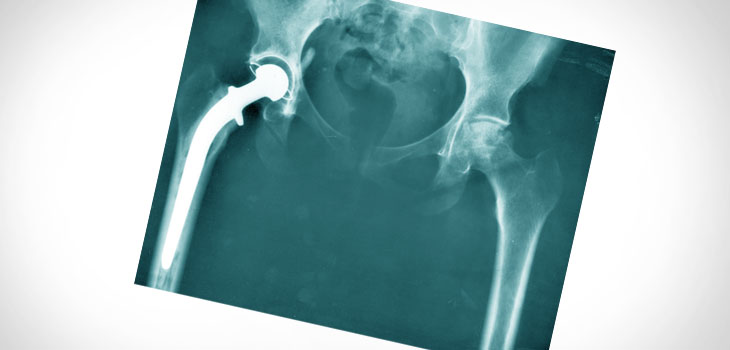
A little more than 5% of patients who undergo total hip and knee arthroplasty return to the hospital within 90 days for an unplanned readmission, according to a study published in October in The Journal of Bone & Joint Surgery.
Joint Arthroplasty Readmissions Top 5%
1 min read Premium comments
Secondary
Benjamin Zmistowski, from Thomas Jefferson University Hospital in Philadelphia, conducted the study. He and his colleagues examined the incidence, causes, and risk factors for readmission following total joint arthroplasty. They used data from an institutional arthroplasty database for 10, 633 admissions for primary arthroplasty (5, 207 knees and 5, 426 hips) performed from January 2004 through December 2008. They identified patients requiring an unplanned readmission within 90 days of discharge from the same database.
As reported by the publication Doctor’s Lounge, the researchers found that in 5.3% of total joint arthroplasties there were 591 unplanned readmissions within 90 days of discharge. Joint-related infection was the most common cause of readmission, followed by stiffness. Independent predictors of readmission within 90 days included black race, male sex, discharge to inpatient rehabilitation, longer hospital stay, unilateral replacement, age, decreased distance between home and the hospital, and total knee replacement.
“It is imperative that measures to limit these complications, through appropriate prophylactic measures and prevention of increased duration of hospital stay and discharge to an inpatient facility, be effectively implemented to limit the physical and psychological impact of readmission on patients and the financial burden to society, ” the authors wrote.
Author
React:
Discussion
This is a fascinating development. In my practice we've seen similar outcomes with the revised protocol. The key differentiator seems to be patient selection criteria. Has anyone else noticed the correlation with BMI thresholds?
Great point. I'd push back slightly on the conclusion, the sample size in the cited study is too small to draw population-level inferences. That said, the directional signal is compelling and worth a larger RCT.
We implemented a similar approach last year. Early results are promising but we're still gathering 12-month follow-up data. Happy to share our protocol if anyone is interested.
Join the conversation
Orthopedic professionals are discussing this. Sign in and upgrade to read every comment and add your voice.