
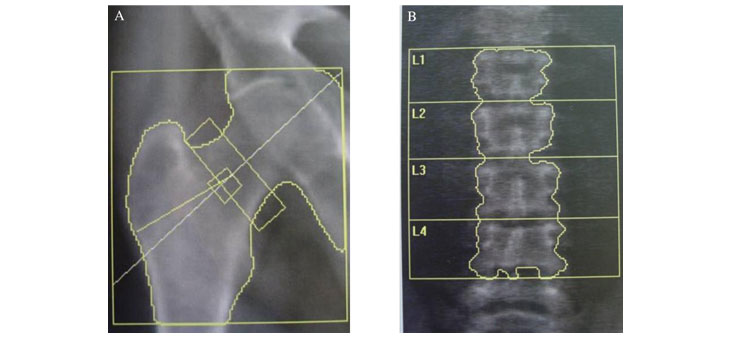
Repeating bone mineral density (BMD) tests after four years provides little clinical benefit when assessing bone fracture risk in seniors age 75 and older, according to a recent study led by researchers at the Harvard Medical School-affiliated Institute for Aging Research at Hebrew SeniorLife. The study appears in the September 25 online issue of JAMA.
Repeating BMD Tests Shows Little Benefit
1 min read Premium comments
Secondary
Currently, there are no established guidelines for the appropriate time interval between BMD tests. Medicare pays for BMD screening every two years without restricting the number of repeat tests and regardless of baseline test results.
“Given the drive to control health care costs while improving quality of care, we wanted to determine whether repeating a BMD screening test is useful, ” explained Sarah Berry, M.D., M.P.H., the study’s lead author, in the September 24, 2013 news release.
Dr. Berry and her colleagues studied 310 men and 492 women whose BMD was assessed twice between 1987 and 1999 as part of the Framingham Osteoporosis Study. This ancillary study of the Framingham Heart Study was led by Dr. Douglas P. Kiel, one of Dr. Berry’s co-authors.
“Our research, which was made possible through the routine clinical examinations performed as part of the Framingham Heart Study, tells us that the initial BMD test does a very good job of identifying people at risk for fracture, ” Berry said. “The current clinical practice of repeating the test every two years may not be necessary in adults over age 75 who aren’t being treated for osteoporosis.”
BMD is included in the Fracture Risk Assessment Tool (FRAX), a widely used calculator that estimates the 10-year risk of major fracture related to osteoporosis. The tool also considers clinical characteristics, such as age and fracture history, which are fracture risk factors. “Instead of repeating the BMD test, we recommend that providers update the patient’s clinical characteristics in the tool at the time of the visit to reassess fracture risk, ” Dr. Berry said.
React:
Discussion
This is a fascinating development. In my practice we've seen similar outcomes with the revised protocol. The key differentiator seems to be patient selection criteria. Has anyone else noticed the correlation with BMI thresholds?
Great point. I'd push back slightly on the conclusion, the sample size in the cited study is too small to draw population-level inferences. That said, the directional signal is compelling and worth a larger RCT.
We implemented a similar approach last year. Early results are promising but we're still gathering 12-month follow-up data. Happy to share our protocol if anyone is interested.
Join the conversation
Orthopedic professionals are discussing this. Sign in and upgrade to read every comment and add your voice.