
That miserable meniscus—the articular cartilage that injures too easily, repairs too slowly if at all and wears out far too soon in the human body. Now Regentis Biomaterials, Ltd, of Princeton, New Jersey and Akiva, Israel, announces new clinical data that is favorable to its GelrinC implant for treating articular cartilage in injured knees.
Regentis Reports Articular Cartilage Repair
2 min read Premium comments
Secondary
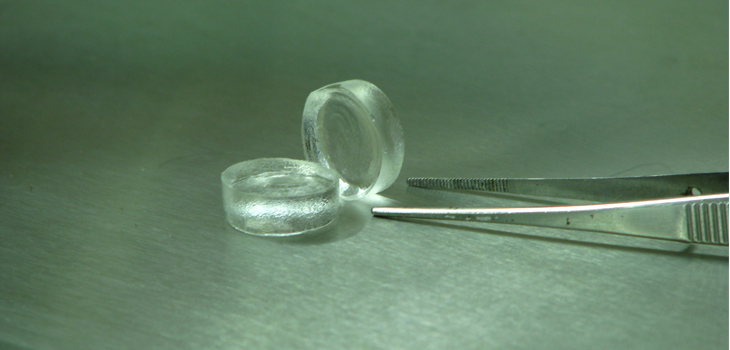
GelrinC is a biodegradable hydrogel implant designed to treat cartilage defects in the knee. In conjunction with microfracture of the area, the product is administered as a liquid to fill the created voids and shape of cartilage defects. It is then converted into a jell-like solid with 90 seconds of exposure to ultra-violet light. According to the results of a recent study, the GelrinC implant naturally degrades within 6-12 months and is replaced with functional and durable cartilage created by stem cells migrating from bone marrow to the site.
Ron Arbel, M.D., a study investigator, told OTW that the product is intended to repair injuries to the articular cartilage in knees—those damaged by a traumatic sports accident or a bad fall—not to repair age-related wear on the meniscus, tissue that has little or no capacity to heal itself. The clinical results came from a single-arm, multi-center study that involved 23 patients in Europe and Israel. (An additional 30 patients are currently enrolled at 12 new sites in Germany, Belgium, Poland, the Netherlands and Israel.)
After two years of study, investigators found that patients had a substantial improvement of the Knee injury and Osteoarthritis Outcome Score (KOOS), representing a 43% improvement, and 32.9 points at 24 months, representing a 60% improvement (52.6 vs. 84.1). KOOS is a patient-reported outcome measurement instrument developed to assess a patient’s opinion about their knee and associated problems. Scores from the international knee documentation committee (IKDC), another measure of patient progress, were more impressive. The subjective questionnaire showed an improvement of 86% at 18 months and 94% at 24 months (40.4 vs. 78.4). Arbel presented the results at the International Cartilage Repair Society World Congress in Izmir, Turkey.
“These results are particularly strong when you compare them against those achieved through standard procedures, such as microfracture, which increase the flow of blood and bone marrow stem cells to the damaged area, ” said Arbel. “GelrinC works in combination with the microfracture procedure to greatly enhance the body’s ability to regenerate new cartilage so that patients can return to an active lifestyle.”
Radiological evaluation by MRI scans demonstrated that newly developed cartilage structure was similar in its quality to native cartilage. “MRI evaluations with combined morphologic and biochemical assessment allowed us to monitor patient progress made with GelrinC, ” said University of Vienna medical professor Siegfried Trattnig, M.D. “We were able to understand using noninvasive magnetic resonance techniques how new tissue integrated with the host tissue, as well as the biochemistry behind the repair tissue.”
CE mark-approved, GelrinC is an investigational device and is not currently available for sale in the U.S. and Israel. Regentis Biomaterials is a privately held company focused on developing and commercializing proprietary hydrogels for tissue regeneration. The company’s core technology is Gelrin based on polyethylene glycol diacrylate and denatured fibrinogen originally developed at the Technion – Israel Institute of Technology by Professor Dror Seliktar. The Gelrin hydrogel platform combines the stability and versatility of a synthetic material with the bio-functionality of a natural substance.
Author
React:
Discussion
This is a fascinating development. In my practice we've seen similar outcomes with the revised protocol. The key differentiator seems to be patient selection criteria. Has anyone else noticed the correlation with BMI thresholds?
Great point. I'd push back slightly on the conclusion, the sample size in the cited study is too small to draw population-level inferences. That said, the directional signal is compelling and worth a larger RCT.
We implemented a similar approach last year. Early results are promising but we're still gathering 12-month follow-up data. Happy to share our protocol if anyone is interested.
Join the conversation
Orthopedic professionals are discussing this. Sign in and upgrade to read every comment and add your voice.