
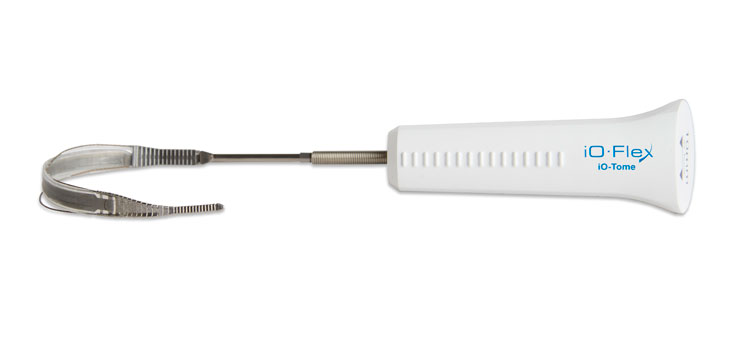
Baxano Surgical, Inc. launched a disposable facetectomy instrument called the iO-Tome on October 1, 2013.
New Facetectomy Instrument and CFO at Baxano
1 min read Premium comments
Secondary
The instrument, according to the company, allows surgeons to perform “rapid and safe” facetectomies when performing certain interbody spinal fusion procedures. Utilizing Baxano’s iO-Flex technology, the instrument delivers a new MicroBlade Shaver design configured to rapidly and precisely remove the fact joint.
Ken Reali, Baxano’s president and CEO, said the company had a strong limited market release over the past six months. “Strategically iO-Tome fits well with our AxiaLIF Plus, VEO and iO-Flex products allowing us to deliver a differentiated and expanded portfolio of products to MIS spine surgeons.”
Robert E. Isaacs, M.D., a neurosurgeon at Duke University Medical Center, who has been an early evaluator of the instrument, stated “The iO-Tome device has substantially decreased the time I spend performing a facetectomy in my tube-based TLIF procedures.”
Slattery Pursues Opportunity
The company also announced a couple of weeks ago that it has appointed Greg Slusser as Vice President of Commercial Operations effective October 7, 2013. In addition, Joe Slattery, executive vice president and chief financial officer, resigned effective September 27, 2013 to pursue another business opportunity. Tim Shannon, vice president of finance, was appointed interim chief financial officer effective September 27, 2013.
Revenue Expectations
Finally, the company continues to expect third quarter revenues in the range of $5.6 to $6.2 million and full fiscal year 2013 revenues in the range of $23.5 to $25.5 million.
Baxano was acquired by TranS1 Inc. last May. Reali, head of TranS1, became CEO of the combined entity.
Author
React:
Discussion
This is a fascinating development. In my practice we've seen similar outcomes with the revised protocol. The key differentiator seems to be patient selection criteria. Has anyone else noticed the correlation with BMI thresholds?
Great point. I'd push back slightly on the conclusion, the sample size in the cited study is too small to draw population-level inferences. That said, the directional signal is compelling and worth a larger RCT.
We implemented a similar approach last year. Early results are promising but we're still gathering 12-month follow-up data. Happy to share our protocol if anyone is interested.
Join the conversation
Orthopedic professionals are discussing this. Sign in and upgrade to read every comment and add your voice.