
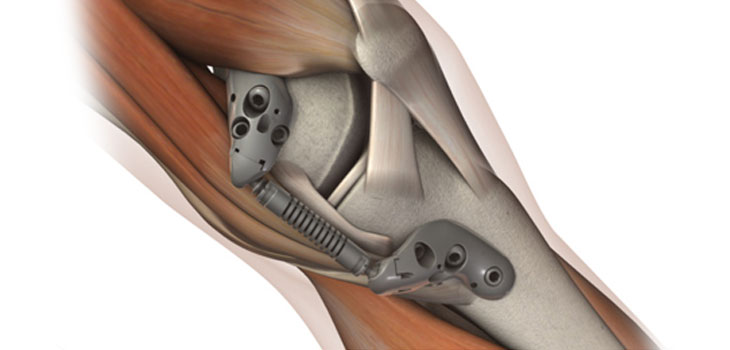
Five years ago a surgeon implanted the first KineSpring in an aching knee and this month Jack Farr, M.D., Director of the OrthoIndy Cartilage Restoration Center of Indiana and the OrthoIndy Sports Medicine Fellowship Program installed the 500th KineSpring worldwide. The KineSpring System, made by Moximed, Inc. of Hayward, California, is an implantable medical spring that works by unloading the weight on the diseased knee joint, without changes to the anatomy. Farr is the Lead Principal Investigator of the U.S.-based SOAR clinical study of the KineSpring System.
Moximed Installs 500th Knee KineSpring
2 min read Premium comments
Secondary
According the Moximed officials, the KineSpring System is intended to provide an innovative treatment option for patients with mild to moderate knee osteoarthritis (OA) who find conservative therapy such as pain medication and knee braces unsuccessful but who are not ready for joint-altering knee surgery. The KineSpring System is implanted in the subcutaneous tissue alongside the joint to cushion the knee from excessive loading. The KineSpring System is completely joint-sparing, so future treatment options are maintained.
As David Hayes, M.D., of the Brisbane Orthopaedic and Sports Medicine Centre, Australia, who implanted the first KineSpring System in 2008 stated, “The KineSpring System offers a joint-preserving surgical alternative for my younger, more active patients with medial knee OA. Five years after implanting the first ever KineSpring System, I remain enthusiastic about the potential of the KineSpring System as an effective treatment option for this difficult patient group.”
“The continued and growing acceptance of the KineSpring System, as evidenced by the achievement of this significant milestone, is very encouraging. It is clear that both surgeons and patients worldwide value the clinical and economic benefits shown by the KineSpring System. Above all, we are most proud to have played a part in the return of a significant number of patients to an active, high-quality lifestyle, ” said Kevin Sidow, President and CEO of Moximed.
According to the Centers for Disease Control and Prevention, OA affects 27 million adults in the U.S. and 15 million of them have knee OA. They estimate the costs associated with arthritis and joint pain in the U.S. at nearly $300 billion annually.
In knee OA, as the cartilage wears away, the bone ends may begin to rub against each other, causing severe pain. Drugs and cartilage repair procedures may temporarily relieve pain. Moximed officials have found that if the excess stress on the joint is removed, as with the KineSpring System, pain may decrease and the natural joint tissues may demonstrate some recovery. The KineSpring System is CE marked in Europe. It is investigational in the U.S. and only available in the U.S. as part of the FDA approved SOAR clinical study.
Author
React:
Discussion
This is a fascinating development. In my practice we've seen similar outcomes with the revised protocol. The key differentiator seems to be patient selection criteria. Has anyone else noticed the correlation with BMI thresholds?
Great point. I'd push back slightly on the conclusion, the sample size in the cited study is too small to draw population-level inferences. That said, the directional signal is compelling and worth a larger RCT.
We implemented a similar approach last year. Early results are promising but we're still gathering 12-month follow-up data. Happy to share our protocol if anyone is interested.
Join the conversation
Orthopedic professionals are discussing this. Sign in and upgrade to read every comment and add your voice.