
On September 10, 2013, Stryker Corporation fired Christopher Ridgeway, the company’s district sales manager in New Orleans. The reason given by the company? Malfeasance.
Flippin’ Cakes and Poachin’ Reps in the Big Easy
6 min read Premium comments
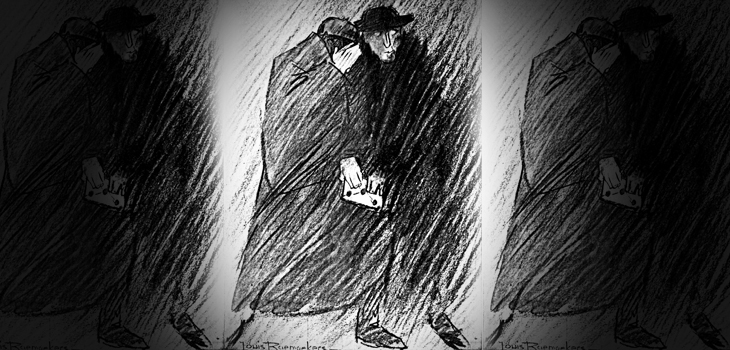
The company says Ridgeway used secret code words to engineer an elaborate scheme devised by rival Biomet, Inc. to move his Stryker customers to Biomet. The “flipped” customers were referred to as “pancakes.”
Stryker Sues
Ten days after firing Ridgeway, Stryker filed a lawsuit in federal court against Biomet, Ridgeway and Richard Steitzer, a former Stryker sales rep in New York, for Breach of Contract and Fiduciary Duty, Misappropriation of Trade Secrets and Tortious Interference.

The Stryker Complaint states the company uncovered an “ill-conceived and long-planned scheme by Biomet, using Stryker representatives in both New York (Steitzer) and Louisiana (Ridgeway), to erode Stryker’s customer relationships and raid sales teams from Stryker’s Neuro Spine ENT (“NSE”) business unit and Craniomaxillofacial (“CMF”) division.
During the course of his September 10, 2013 exit interview, Stryker claims Ridgeway “brazenly announced that he devoted only 50% of his time to what he referred to as the ‘Stryker dog and pony show’ and instead parlayed his Stryker contacts to divert opportunities, and potential Stryker employees, to his personal side businesses.”
Allegations
As Stryker employees and since leaving their employment, Stryker’s suit alleges that Ridgeway and Steitzer conspired with Biomet to:
- Convert existing Stryker employees to work for Biomet
- Prevent Stryker from successfully hiring and retaining new employees in order to secure Biomet’s foothold in certain territories
- Sabotage Stryker’s existing customer relationships to convert business to Biomet
- Secretly channel Stryker’s confidential information to Biomet, including its customers’ preferences, margins, sales quotas and targets, and financial performance in the territories.
“These continuing malicious and opportunistic actions have resulted in the loss of significant business with expected losses exceeding $3 million, ” claims the lawsuit.
The Plot
In June 2013, Ridgeway allegedly informed his sales representatives that Biomet expressed interest in bringing the Stryker CMF and NSE sales teams to Biomet and that Biomet would “offer us a lot of money.”
According to the lawsuit, over the course of the next few months, Ridgeway was in conversations with Biomet regarding moving Stryker business to Biomet. He was nervous about Stryker finding out his plans, and used the code word “pancake” to discuss the business he planned to “flip.”
Secret Hotel Meeting
These efforts came to a head on July 3, 2013, when Ridgeway and another sales rep went to a hotel room at the Roosevelt Hotel in New Orleans where Biomet allegedly wanted to show them its product offerings and discuss possible employment.

The sales rep was in the midst of servicing a Stryker client, to which Ridgeway told the representative to “forget” that client and “come to the hotel.”
During the course of the meeting, Stryker claims Ridgeway identified to Biomet certain specific Stryker customer preferences and needs, product usage, and also provided a comparison evaluation of Biomet’s presented products versus Stryker’s existing products. “This information constituted Stryker’s confidential information and was information that Ridgeway was not authorized to disclose to Biomet, ” states the Complaint.
Biomet also identified that its strategies were to rapidly produce competitive products to Stryker to meet customer demand and to move Stryker’s business to Biomet, utilizing Ridgeway’s Stryker experience and access to Stryker’s customers.
Stryker claims Biomet worked with Ridgeway in an effort to bypass Stryker’s non-compete, using Ridgeway as a go-between between Stryker’s employees, including Sheldon Green and Lauren Border, and Biomet.
Flippin’ Recipe
Stryker also claims that Ridgeway used his knowledge of Stryker’s confidential and proprietary information to enter the market and sell his genetic testing devices to Stryker’s customers and diverted Stryker’s funds to promote his personal business.
Between July 3, 2013 and September 6, 2013, Ridgeway said that he intended to move Stryker’s business to Biomet en masse and that to make this move work he would have to reach agreements with Stryker’s customers before leaving Stryker’s employment to start purchasing from Biomet.
As part of his plan, Ridgeway allegedly requested that one of his sales representatives “make a sheet for all accounts that list of administrators, director, team leads, docs SPD and PO people.” The sales representative did not assist Ridgeway in making this list, but Ridgeway created such a handwritten list that he considered to be his “business plan” for Biomet. The “business plan” identified these key Stryker relationships, and also included information related to the value of each account, and the amount of medical device sets that Biomet would need to have ready for him if he was going to flip the business.
Ridgeway, according to the complaint, shared this business plan with Biomet, resulting in Biomet preparing sets for Ridgeway prior to his departure from Stryker, and planning to make those sets available to Ridgeway while he was still a Stryker employee.
Moreover, Stryker claims that in mid-July, Ridgeway sent a list of Stryker’s CMF and NSE customers to Green. No valid basis existed for Ridgeway to share this information with Green as Green’s territory was solely in Georgia and Green had not requested a transfer to Louisiana.
Side Businesses
In early September 2013, Stryker said it learned that Ridgeway was devoting at least 50% of his time to operating two medical supply side businesses, through which he was “exploiting relationships with Stryker’s customers to sell other medical devices.” Stryker also said it learned that Ridgeway was requiring other Stryker employees to participate in such sales endeavors for his side businesses.
Ridgeway allegedly formed and operated a company named Stone Surgical LLC in November 2009.
With Stone Surgical, Stryker claims Ridgeway assisted his brother, Patrick Ridgeway, as a distributor and Area Sales Representative for distribution of genetic testing products for National Molecular Testing Corporation.
Ridgeway also formed a company known as UTC Laboratories, LLC, now known as Renaissance RX, with his brother, among others.
As late as November 2012, Stryker alleges that Ridgeway was inviting other sales representatives who reported to him for Stryker, to participate in Natural Molecular. Included in this behavior, Ridgeway provided certain Stryker sales representatives with reports on product offerings and information related to Natural Molecular.
In August 2013, Stryker claims government complaints related to Natural Molecular forced Ridgeway to shut down this company, but Ridgeway began offering a similar product through Renaissance RX.
Ridgeway allegedly leveraged the relationships he developed through the sale of Stryker’s products as an entry for him to make sales of Natural Molecular’s genetic testing products.
Failure to Service
Stryker says that in addition to the over 50% of time that Ridgeway dedicated to his side businesses, he also failed to adequately service Stryker’s businesses, including but not limited to:
- Refusing to hire qualified candidates necessary to support the South Louisiana market, rejecting all 33 candidates who interviewed with or applied for employment with Stryker
- Attempting to hire and actually hiring employment candidates for the benefit of his side businesses
- Making the branch so hostile that four employees have resigned in the past 20 months, resulting in an 80% turnover rate during that time period.
One potential employee was allegedly never placed through the formal interview process. Rather, Ridgeway took him on sales “ride-a-longs.” Although the potential employee sent a formal “thank you” letter to Stryker for the opportunity to interview, Ridgeway instead hired him to work for his side businesses.
$3 Million Solicitations
On September 23, 2013, Green resigned from Stryker. Although he has to date refused to disclose his current employer—despite contractual obligations to do so—Stryker claims Green was observed attempting to sell Biomet products in a number of Louisiana hospitals, uncovered emails from Ridgeway to Green in mid-July divulging Stryker’s Louisiana customers, and a September 8, 2013 email from Biomet to Green soliciting Green for employment.
Also in Green’s resignation letter, despite claiming to provide two-weeks notice, Stryker claims Green abandoned a procedure scheduled for that day, threatening that “a competitor” would take the business if Stryker could not attend the procedure and proceeded to ignore Stryker’s repeated attempts to reach him by cell phone and email.
Prior to September 6, 2013, Ridgeway allegedly solicited two Stryker doctors for his genetic testing company, as well as for the benefit of Biomet. These two doctors, if they were to stop doing business with Stryker, would put at risk approximately $3 million in Stryker’s business.
By September 6, 2013, Stryker claims Ridgeway confirmed that the conversion of the Stryker business was a done deal, that he had an operational staff in place, and that he would be ready to turn the business over to Biomet by October.
It was not until September 8 that Stryker first learned of Ridgeway’s plan to leave for Biomet and his alleged attempts to move Stryker’s business en masse to Biomet. By the September 10 Ridgeway was fired.
Allegations Only
There has been no trial and Stryker’s claims are just allegations. Stryker declined to comment for this story. But Ridgeway has responded and we’ll bring you his side of the story in the next installment of this ongoing lawsuit.
Author
React:
Discussion
This is a fascinating development. In my practice we've seen similar outcomes with the revised protocol. The key differentiator seems to be patient selection criteria. Has anyone else noticed the correlation with BMI thresholds?
Great point. I'd push back slightly on the conclusion, the sample size in the cited study is too small to draw population-level inferences. That said, the directional signal is compelling and worth a larger RCT.
We implemented a similar approach last year. Early results are promising but we're still gathering 12-month follow-up data. Happy to share our protocol if anyone is interested.
Join the conversation
Orthopedic professionals are discussing this. Sign in and upgrade to read every comment and add your voice.