
VEXIM, an enterprise specializing in the minimally invasive treatment of vertebral fractures, has announced that the results of a comparative biomechanical study carried out by Marburg University’s Traumatology department (Germany) were published in the August issue of the CLINICAL BIOMECHANICS international journal.
VEXIM Publishes SpineJack Results
2 min read Premium comments
Secondary
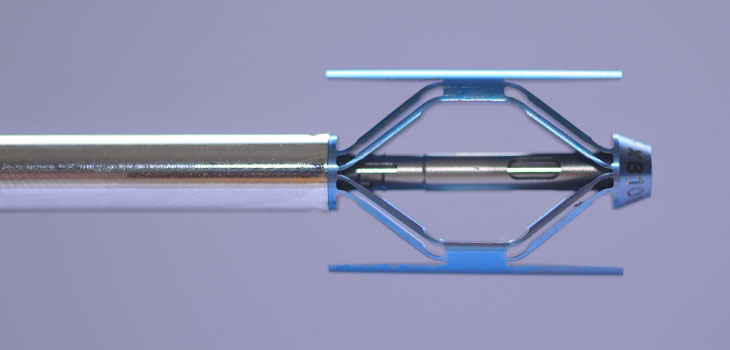
The aim of this study was to evaluate the anatomic restoration of 36 fractured vertebral bodies with osteoporosis and the maintaining of the gained height after recompression by comparing the SpineJack and balloon kyphoplasty techniques. The results obtained demonstrate a significant advantage in favor of the SpineJack regarding the restoration of vertebral height that is carried out to reestablish the spinal column’s balance.
“The vertebral height restoration was over 93% for the groups treated with SpineJack even after recompression”, said Dr. Antonio Krüger, orthopedic trauma surgeon in trauma and reconstructive surgery at the Philipp’s University (Marburg) and the study’s main investigator, in the September 12, 2013 news release.
Vincent Gardès, CEO of VEXIM, added: “I would first and foremost like to congratulate Dr. Antonio Krüger’s team for the publication of their study in this highly recognized journal for clinicians and scientists. These results clearly show the advantages of the SpineJack, and further increase our confidence in the pursuance of our clinical program.”
Gardès told OTW, “As communicated during the IPO in spring 2012 our goal is to become a leader in the treatment of vertebral compression fractures in Europe. By the end of 2014, we will have 10% of market share in Europe thanks to our direct operations in France, Germany, Spain, UK & Italy. We are today the only company having a fully dedicated sales force focusing on spine traumatology only. Several prospective and retrospective clinical studies will show in the very near future the outstanding performances of the Spine Jack device when compared to conventional surgery or conservative treatment. In terms of R&D, we are expanding our portfolio to be able to treat all kinds of vertebral fractures including more severe and unstable high energy ones. This includes innovative work on vertebroplasty, cements and arthrodesis. We will launch two new products every year in this specific arena during the next three years.”
React:
Discussion
This is a fascinating development. In my practice we've seen similar outcomes with the revised protocol. The key differentiator seems to be patient selection criteria. Has anyone else noticed the correlation with BMI thresholds?
Great point. I'd push back slightly on the conclusion, the sample size in the cited study is too small to draw population-level inferences. That said, the directional signal is compelling and worth a larger RCT.
We implemented a similar approach last year. Early results are promising but we're still gathering 12-month follow-up data. Happy to share our protocol if anyone is interested.
Join the conversation
Orthopedic professionals are discussing this. Sign in and upgrade to read every comment and add your voice.