
First the problem—then a throw of the dart at a solution. As every patient with painful joints knows, injuries affecting cartilage are notoriously hard to treat because cartilage cannot heal itself. For more than a decade researchers have been trying to unlock the code to using stem cells to repair joints and cartilage.
Recalcitrant Stem Cells Meet Their Match
2 min read Premium comments
Secondary
However, the stem cells have not been cooperating. Stem cell based cartilage regeneration is still in its infancy because stem cells will not stay in a desired tissue site and remain alive. As Benjamin Holmes, a writer for Nanotechweb noted, it is also difficult for researchers to control stem cells so-called chondrogenic differentiation.
Labs around the world have been looking at innovative nanomaterials in an attempt to create complex, biomimetic composites and structures called “scaffolds” that can support and direct how stem cells form and eventually develop into fully formed tissue. The hope was that these nanomaterials would mimic the physical and chemical characteristics of human tissue extracellular matrix and provide a structural as well as functional framework for cell growth.
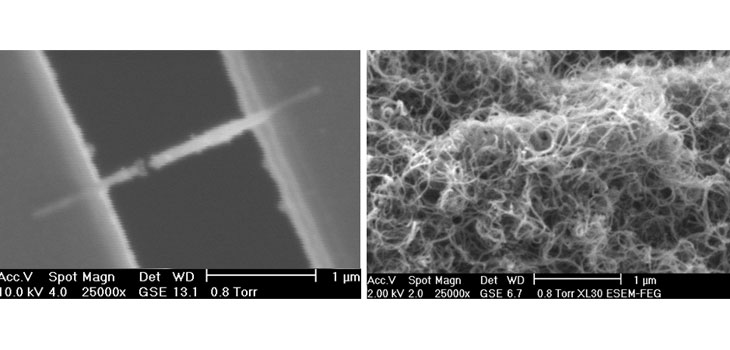
A team led by Lijie Grace Zhang, Ph.D. and Michael Keidar, Ph.D., at George Washington University, Washington, D.C., may have done that. They employed carbon nanotubes to modify polymeric scaffolds, added nanoscale surface roughness to these structures, and modulated their mechanical properties. The idea (and the hope) was that these nanotubes could be incorporated into existing polymer networks so that the scaffolds’ properties would match the characteristics of the human tissue extracellular matrix which makes up cartilage. They found that scaffolds made from these fibers had mechanical properties that were virtually the same as native articulate cartilage.
To quote from the Nanotechweb article, “cell studies with human bone marrow derived stem cells showed that biomimetic nano/micro scaffolds made with H2 treated MWCNTs [multi-walled carbon nanotubes] not only outperformed un-purified MWCNT scaffolds, but also greatly outperformed plain PLLA [poly-L-lactide] scaffolds. Stem cells not only grew better on H2 CNT [carbon nanotubes] scaffolds, but also regenerated more cartilage in two weeks. This means that CNT-modified polymer scaffolds could usher in a new era in cartilage tissue engineering, and foster a whole new class of nanocomposite materials for tissue regeneration and stem cell therapies.”
Author
React:
Discussion
This is a fascinating development. In my practice we've seen similar outcomes with the revised protocol. The key differentiator seems to be patient selection criteria. Has anyone else noticed the correlation with BMI thresholds?
Great point. I'd push back slightly on the conclusion, the sample size in the cited study is too small to draw population-level inferences. That said, the directional signal is compelling and worth a larger RCT.
We implemented a similar approach last year. Early results are promising but we're still gathering 12-month follow-up data. Happy to share our protocol if anyone is interested.
Join the conversation
Orthopedic professionals are discussing this. Sign in and upgrade to read every comment and add your voice.