
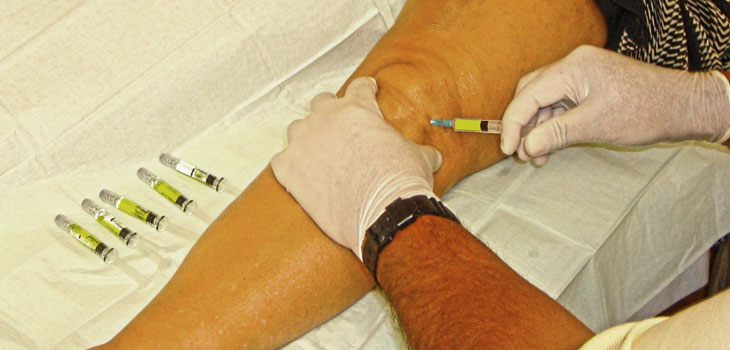
Have a patient troubled with mild to moderate pain caused by knee osteoarthritis? Try intra-articular hyaluronic acid injections (HA). A new meta-analysis of 29 randomized studies involving more than 4, 500 patients with knee osteoarthritis (OA) found that intra-articular hyaluronic acid injections provided significant improvement in pain and function compared to saline injections. Medical News Today reported the study was published in the current issue of Clinical Medicine Insights: Arthritis and Musculoskeletal Disorders.
HA Injections Ease Knee Osteoarthritis Pain
1 min read Premium comments
Secondary
Mark A. Snyder, M.D., an orthopedic surgeon from the TriHealth Orthopedic and Spine Institute in Cincinnati, Ohio, said, “The data set is consistent with what I and many other physicians have clinically observed for many years—HAs have been found to be safe, can help relieve knee pain from osteoarthritis, and are appropriate treatment for people with mild to moderate forms of the disease.”
Neither HA or saline injections resulted in serious adverse events. Researchers found very large treatment effects between four and 26 weeks for knee pain and function which represented approximately a 50% improvement in pain and function from baseline with viscosupplementation. Improvements in knee pain and function with viscosupplementation were statistically superior compared to saline injections.
“Studies such as this are critical in helping physicians and patients make informed decisions, ” said Snyder. “Currently, there are limited treatment options available to healthy people with mild to moderate OA. Access to HA treatments is a great option for those who are seeking help in staying active.”
Osteoarthritis is a progressive disease that affects 27 million Americans. The most common joint to be affected is the knee. Advancing age, previous joint trauma and genetic predisposition are all risk factors while obesity contributes to the diseases’ progression.
Author
React:
Discussion
This is a fascinating development. In my practice we've seen similar outcomes with the revised protocol. The key differentiator seems to be patient selection criteria. Has anyone else noticed the correlation with BMI thresholds?
Great point. I'd push back slightly on the conclusion, the sample size in the cited study is too small to draw population-level inferences. That said, the directional signal is compelling and worth a larger RCT.
We implemented a similar approach last year. Early results are promising but we're still gathering 12-month follow-up data. Happy to share our protocol if anyone is interested.
Join the conversation
Orthopedic professionals are discussing this. Sign in and upgrade to read every comment and add your voice.