
By only providing the tools needed, the FlowerCube will challenge the orthopedic status quo and cut implant and instrument costs by as much as 30%.
FlowerCubes Promise to Cut Orthopedic Costs
2 min read Premium comments
Secondary
That’s the promise Oliver Burckhardt made as he came roaring back into orthopedics with a September 4, 2013 announcement that his new company, Flower Orthopedics Corporation, had just made a deal with McKesson Medical-Surgical to provide implants and instruments to the supply manager’s surgery center customers.
No Reps – Mobile App
The Cube is sold in a rep-less model to eliminate the need to have an implant rep in the room during surgery. Surgeons can pick their preferences using a mobile tablet app which streamlines the ordering/replenishment process and minimizes inventory levels. Reps are now apps.
Burckhardt is no rookie having had stints as president of Orthofix, Inc. and CEO of Scient’x Corp.
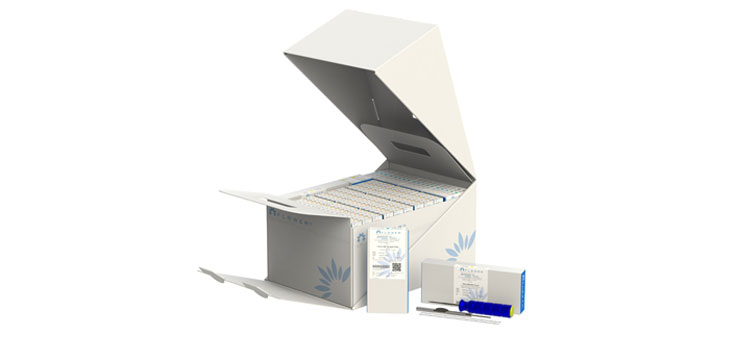
FlowerCube
The product is a standardized, single-use bone fixation package that provides, according to the company, “significant operation and operational efficiencies.” Each cube is indication-tailored and contains all of the necessary implants, trials and instruments needed to perform a procedure.
The company says the cube concept provides surgery-specific applications in individual sterile packaging, which eliminates the need for pre-op sterilization and, “considerably” reduces the number of implants and instruments brought into the operating room (OR). All instruments in the cube are single-use and disposable, removing the need to reprocess surgical tools post-op. The disposable feature helps minimize the risk of infection potentially associated with reusable devices and expedite OR turnaround time. With these efficiencies, the company believes hospitals and ambulatory surgical centers (ASCs) could save as much as 30% of the combined implant and instrument costs currently spent on each surgical case.
Burckhardt, president and CEO of the company, said the number of items brought into the procedure room for each orthopedic case today is unnecessarily excessive. “It’s confusing, time-consuming and inefficient. If providers are going to compete in this environment of declining reimbursements, they need better solutions. We developed our FlowerCubes to simplify the process of preparing for and conducting bone fixation surgery while ensuring clinical excellence. What you get is consistent, reliable quality with faster patient turnaround time likely.”
Products and Roll-Out
Through an exclusive distribution agreement with McKesson, the company will immediately begin the roll-out of its hand and wrist cubes. Foot cubes will be launched over the course of the fourth quarter 2013. The goal is in 2014 to have cubes addressing all commonly occurring fractures.
The company currently offers a broad range of bone-fixation implants. More than 200 plate options are manufactured in partnership with ZRINSKI AG, a German manufacturer and supplier of implants, medical products and technical solutions.
“Providing surgeons with only the tools they need in a more efficient way, without compromising patient care, is the right type of change we need for the future of orthopedics, ” concluded Burckhardt.
Author
React:
Discussion
This is a fascinating development. In my practice we've seen similar outcomes with the revised protocol. The key differentiator seems to be patient selection criteria. Has anyone else noticed the correlation with BMI thresholds?
Great point. I'd push back slightly on the conclusion, the sample size in the cited study is too small to draw population-level inferences. That said, the directional signal is compelling and worth a larger RCT.
We implemented a similar approach last year. Early results are promising but we're still gathering 12-month follow-up data. Happy to share our protocol if anyone is interested.
Join the conversation
Orthopedic professionals are discussing this. Sign in and upgrade to read every comment and add your voice.