
A novel bone cement delivery technology which does not require an implanted device in the spine has received FDA clearance.
Device-Free PVA System Cleared by FDA
2 min read Premium comments
Secondary
Crosstrees Medical, Inc. announced on September 19, 2013 that its PVA (percutaneous vertebral augmentation) Pod System was cleared after a prospective, single-arm IDE (investigational device exemption) study with 135 patients in the U.S., China, Venezuela and Belgium compared the Crosstrees procedure to a literature control which included vertebroplasty and kyphoplasty outcomes.
According to the company, the IDE study met its primary endpoints of a significant reduction in pain scores and PMMA (polymethyl methacrylate) bone cement extravasation over a follow-up period of 12 months. Additionally, the Crosstrees procedure demonstrated a significant reduction in new fracture rates often found with vertebroplasty and kyphoplasty procedures.
Robert Scribner, the company’s CEO and president, said the system was also CE-marked. “We believe that the Crosstrees technology offers the physician unprecedented control of PMMA delivery in vertebral augmentation and has demonstrated significantly improved procedural outcomes for patients.”
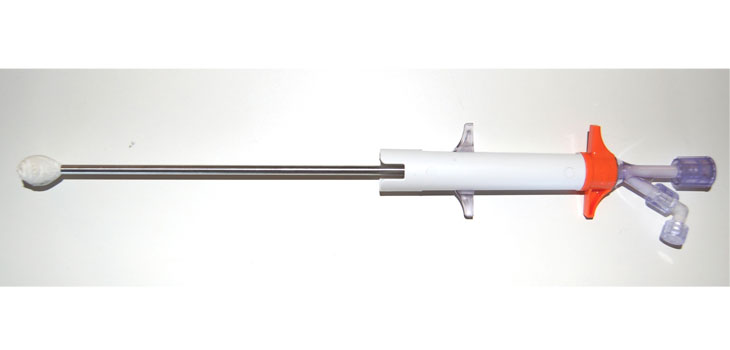
The company says the technology’s novel approach to PVA has been shown to significantly reduce new vertebral fractures post treatment where literature reported rates range from 23% to 48%. Devices using the technology feature a polymer material to control the delivery of a specific volume and geometry of PMMA bone cement to the vertebral fracture site. Following PMMA delivery, the construct is opened and removed from the vertebra, leaving only the PMMA filler material behind. The procedure involves steps familiar to physicians currently doing percutaneous vertebral augmentation and does not require an implanted device in the spine.
The system uses a soft woven fabric pod that allows the physician to control the flow of bone cement as it is injected into the vertebral body. This use of a fabric pod eliminates the balloon inflation step required in traditional kyphoplasty procedures. The system reduces the need for repeated device exchanges during the procedure. “The system design simplifies the procedure and potentially reduces procedure time, ” stated the company press release.
The technology presents “an important opportunity to improve PVA procedures…and offers unprecedented PMMA control which may reduce leakage complications, and the 12-month IDE study outcomes clearly demonstrate superior pain relief and reduced new fracture rates in patients with osteoporotic compression fractures, ” said Philip Yuan, M.D., of the Memorial Orthopaedic Surgical Group in Long Beach, California. Dr. Yuan holds stock options in the company.
Crosstrees Medical was founded in 2003 to develop surgical techniques and procedures for vertebral fractures. The company is privately held and funded by Ascent Biomedical Ventures, Rho Ventures, and private individuals.
Author
React:
Discussion
This is a fascinating development. In my practice we've seen similar outcomes with the revised protocol. The key differentiator seems to be patient selection criteria. Has anyone else noticed the correlation with BMI thresholds?
Great point. I'd push back slightly on the conclusion, the sample size in the cited study is too small to draw population-level inferences. That said, the directional signal is compelling and worth a larger RCT.
We implemented a similar approach last year. Early results are promising but we're still gathering 12-month follow-up data. Happy to share our protocol if anyone is interested.
Join the conversation
Orthopedic professionals are discussing this. Sign in and upgrade to read every comment and add your voice.