
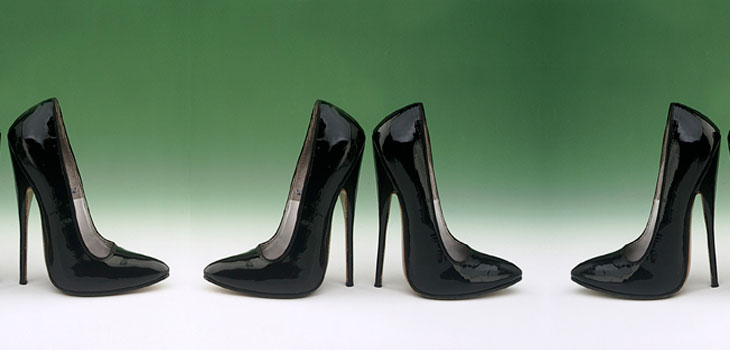
Fashion rules and despite the pain involved, women (for the most part) do not—will not—give up wearing their stiletto heels, no matter how much it may hurt to walk in them. Bunions afflict ten times more women than men. Orthopedic surgeon James Clayton, who believes the condition to be a genetic muscle imbalance, advises young women concerned about their feet “to check out your mother and aunties because it tends to run in families.”
Bunion Surgery Keeps Patients in High Heels
1 min read Premium comments
Secondary
“If you are prone to the condition then high heels will make it a lot worse. That does not stop women wearing them even if they are in a great deal of pain, I’ve found. I see a lot of women in pain who still would not give up their high heels, including some who have to wear them because of the work they are in, ” Clayton said.
Clayton has found a way for women with bunions to continue to wear their high heels. He operates at Sportsmed-SA at Stepney, the first hospital in South Australia to introduce keyhole surgery for bunions. Doctors push fine burrs that rotate at high speed through tiny incisions to cut the bone. They then insert screws to fix the results in place.
Clayton says that the half-hour procedure—compared with traditional open surgery—can mean minimal damage to soft tissue, fewer wound problems, less stiffness, reduced scarring and faster healing.
About 90% of Clayton’s patients are women, including athletes who are having trouble with their sports shoes, let alone evening wear. “We get some young athletes who can’t get into their runners and it is affecting their sports careers, as well as women quite desperate to get back into their fashionable heels including some who keep wearing their heels no matter how much it hurts, ” he said. He added that, following the surgery “they are a lot more likely to get back into high heels again.”
Author
React:
Discussion
This is a fascinating development. In my practice we've seen similar outcomes with the revised protocol. The key differentiator seems to be patient selection criteria. Has anyone else noticed the correlation with BMI thresholds?
Great point. I'd push back slightly on the conclusion, the sample size in the cited study is too small to draw population-level inferences. That said, the directional signal is compelling and worth a larger RCT.
We implemented a similar approach last year. Early results are promising but we're still gathering 12-month follow-up data. Happy to share our protocol if anyone is interested.
Join the conversation
Orthopedic professionals are discussing this. Sign in and upgrade to read every comment and add your voice.