
Biomet Inc. has to pay Neil Kahanovitz, M.D., a former president of the North American Spine Society $2.7 million in past-due royalties.
Biomet Owes Former NASS President $2.7 Million
2 min read Premium comments
Secondary
Kahanovitz sued Electro-Biology Inc. and EBI LLC, two Biomet subsidiaries in 2011, after the companies stopped paying him $250, 000 in royalties from an agreement signed in 1992. He eventually stopped providing consulting services to the company. The contract had an expiration date of November 2008 and the company then stopped paying the surgeon. However, the contract also said payments would continue “during the term of this agreement and for so long as Kahanovitz is performing services within the agreement field.
Kahanovitz won the suit in 2011, but the company appealed. A New Jersey appeals court confirmed the lower court ruling.
Pastena Testimony
According to published reports, when the lower court decided Kahanovitz was still owed royalties, it took into consideration testimony from current and former executives from Electro-Biology and EBI who signed the original deal. Former EBI CEO James Pastena reportedly testified that the agreement was meant to reward Kahanovitz as long as he continued to practice orthopedic surgery, whether he was consulting for the companies or not.
Mass Device reported on August 27, 2013, that Pastena testified that the underlying purpose of the agreement “encompassed a number of factors: ‘1) To take a leading light, a world renown figure . . . and lock him into the corporation . . . so nobody else could take advantage of his input’ and 2) ‘because of the exclusivity’ of the agreement, to ‘use him as an advisor’ more generally. According to Pastena, ‘this royalty was to continue for as long as he was in the practice of medicine’ and EBI ‘would have stated exactly if [it had] wanted it to end, ‘” according to the documents.”
Pastena also testified that Kahanovitz’s consulting agreement would be reviewed and modified at the end date if necessary. Pastena explained that as long as Kahanovitz “was working as a spine surgeon with his image, with his contacts, with his advice that’s how long this would last.”
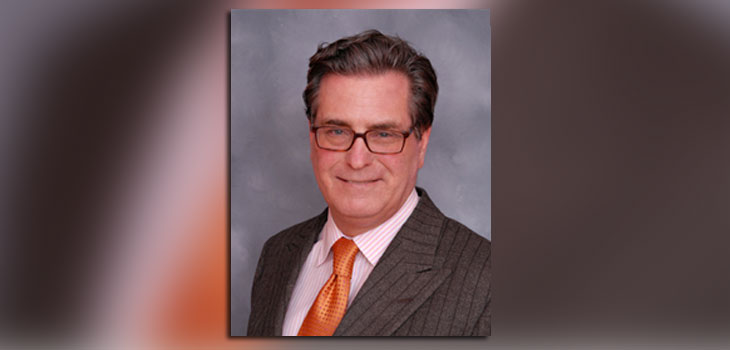
Neil Kahanovitz, M.D.
Kahanovitz is the director of spine surgery at the Center for Orthopaedics in West Orange, New Jersey.
His professional distinctions include:
- Director of Spine Surgery, Washington Hospital Center 1989-2002
- President, North American Spine Society 2000
- Volvo Award for Low Back Pain Research 1998
- International Society for the Study of the Lumbar Spine research award 1998
- Chief of Back Surgery, Hospital for Joint Diseases, New York City 1982-1989
- Fellowship, Hospital for Special Surgery: Specialty – Spine Surgery 7/1/80-6/30/81
He has published over 50 scientific articles, 12 book chapters and the book Diagnosis and Treatment of Low Back Pain. He served as deputy editor of of The Spine Journal from 2001 to 2004 and currently serves on the editorial boards of Spine, Orthopedics Today and Mosby Spine Surgery. At present, he is writing a book for the general public on the care and treatment of the lower back.
Author
React:
Discussion
This is a fascinating development. In my practice we've seen similar outcomes with the revised protocol. The key differentiator seems to be patient selection criteria. Has anyone else noticed the correlation with BMI thresholds?
Great point. I'd push back slightly on the conclusion, the sample size in the cited study is too small to draw population-level inferences. That said, the directional signal is compelling and worth a larger RCT.
We implemented a similar approach last year. Early results are promising but we're still gathering 12-month follow-up data. Happy to share our protocol if anyone is interested.
Join the conversation
Orthopedic professionals are discussing this. Sign in and upgrade to read every comment and add your voice.