
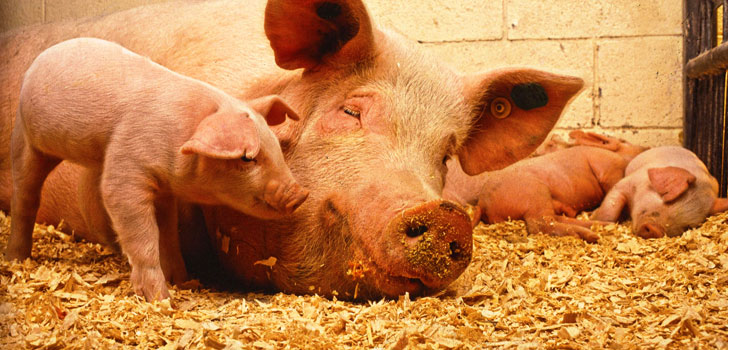
A California-based start-up, SMC Biotechnology, is betting that carbohydrates hold the key to rapid bone healing after surgery or a traumatic injury. Luke Timmerman, national biotech editor of Xconomy, writes that the carbohydrates that SMC Bio is betting on are variations of heparan sulfate, a long-chained sugar molecule that promotes bone healing by binding with bone morphogenic protein-2 (BMP-2). The sugar molecules come from the mucosal lining of pig intestines, just as does the blood-thinning agent heparin.
Pig Intestines May Aid Bone Repair
1 min read Premium comments
Secondary
SMC Co-Founder and CEO Michael Crockett got the idea from the laboratory of Simon Cool and Victor Nurcome in Singapore’s A*STAR research center. The role of BMP-2 in healing bones after an injury was well known, but Crockett and the researchers proposed that carbohydrates were what were missing at injury sites. The injured area was already flooded with the BMP-2 growth factor. By adding carbohydrates to the site of the injury the bone-healing signals coming from the BMP-2 and stem cells would be enhanced, they proposed.
SMC’s plan is to put the heparan sulfate variants from the pig intestines on a collagen sponge that a doctor can place at a wound site during back surgery, or any procedure to repair broken bones. The technology is classified as a medical device rather than as a drug for FDA regulatory purposes.
SMC has completed tests on rabbits which Crockett judged successful. The company is planning a clinical trial in 2014 on sheep to confirm the results in heavier animals. “Instead of injecting growth factors or stem cells in the body, we’re using what’s already there, ” Crockett told Timmerman. “We’re just enhancing the body’s natural process, enhancing bone healing.”
Author
React:
Discussion
This is a fascinating development. In my practice we've seen similar outcomes with the revised protocol. The key differentiator seems to be patient selection criteria. Has anyone else noticed the correlation with BMI thresholds?
Great point. I'd push back slightly on the conclusion, the sample size in the cited study is too small to draw population-level inferences. That said, the directional signal is compelling and worth a larger RCT.
We implemented a similar approach last year. Early results are promising but we're still gathering 12-month follow-up data. Happy to share our protocol if anyone is interested.
Join the conversation
Orthopedic professionals are discussing this. Sign in and upgrade to read every comment and add your voice.