
The FDA has given Austin, Texas-based Ortho Kinematics, Inc. clearance to expand the company’s VMA (Vertebral Motion Analysis) system beyond the lumbar spine to the cervical spine. This may be good news for surgeons needing evidence with insurance payers.
Ortho Kinematics System Cleared for Cervical
1 min read Premium comments
Secondary
Ortho Kinematics is a diagnostic company focused on spine imaging informatics.
The VMA system is a new diagnostic technology that, according to the company, is an alternative to a test that has been routinely prescribed for the assessment of spinal instability for over 70 years. The company says the current method of detecting spinal dysfunction, static end-range bending X-rays, is outdated. Spinal instability can result in severe back and neck pain, and is the number one diagnosis driving the 500, 000+ spine fusion surgeries performed in the U.S. each year.
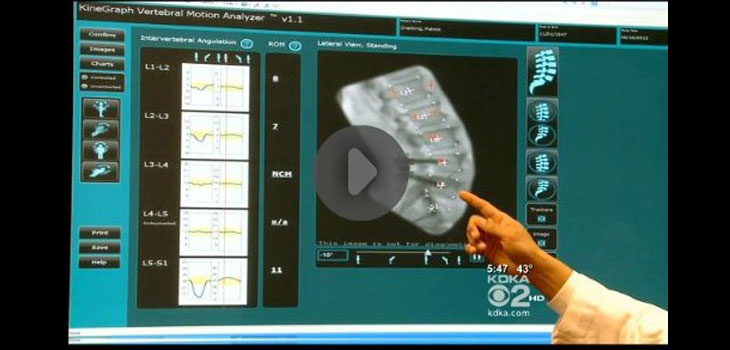
The VMA is a noninvasive painless test that uses fluoroscopy to capture X-ray videos of patient’s spine in motion. These videos are then used to produce measurements of the movement between the bones in the spine.
Evidence for Payers
David Lee, M.D., a spine surgeon user of the VMA lumbar system, said, “I have seen for myself cases where the VMA has been the only test capable of providing the evidence demanded by insurance companies to approve coverage for lumbar surgery. With the new cervical system, I can now offer this valuable option to my neck pain patients as well.”
This technology standardizes and automates each of its basic steps:
- Patient bending utilizes patented Motion Normalizer devices, which provide powered passive trunk bending in either a standing or lying down configuration.
- Image acquisition with hundreds of fluoro-images of the spine are captured at standardized trunk bending angles.
- Image analysis image recognition software locates the vertebrae on each frame. The Intervertebral Angle (IVA) is plotted as a function of the degree of trunk bending, creating a plot for each vertebral level.
VMA testing is now available at a select set of leading spine surgery centers. A large scale national roll-out is scheduled for early 2014.
Author
React:
Discussion
This is a fascinating development. In my practice we've seen similar outcomes with the revised protocol. The key differentiator seems to be patient selection criteria. Has anyone else noticed the correlation with BMI thresholds?
Great point. I'd push back slightly on the conclusion, the sample size in the cited study is too small to draw population-level inferences. That said, the directional signal is compelling and worth a larger RCT.
We implemented a similar approach last year. Early results are promising but we're still gathering 12-month follow-up data. Happy to share our protocol if anyone is interested.
Join the conversation
Orthopedic professionals are discussing this. Sign in and upgrade to read every comment and add your voice.