
Researchers at New York’s Hospital for Special Surgery (HSS) report the first in-depth study of repair techniques for the repair of knee cartilage. And the results are encouraging. The study was an evaluation of Zimmer, Inc.’s De Novo NT Natural Tissue Graft. Scott Rodeo, M.D., orthopedic surgeon and co-chief of the sports medicine and shoulder service at HSS said, “De Novo NT compares favorably to our existing techniques, given that it is easy to do and involves a one step procedure. We are cautiously optimistic. It clearly regenerates tissue, but we need further long-term follow-up.”
Major Study Positive for Cartilage Rejuvenation
2 min read Premium comments
Secondary
In the knee, articular cartilage can be damaged by a traumatic sports accident, a bad fall, or normal wear and tear in active individuals. Articular cartilage lesions cause pain and can lead to osteoarthritis. “Articular cartilage injuries to the knee are fairly common, and they are hard to treat, ” said Rodeo. “Cartilage has no capacity to heal spontaneously, and cartilage lesions over time can get progressively larger.”
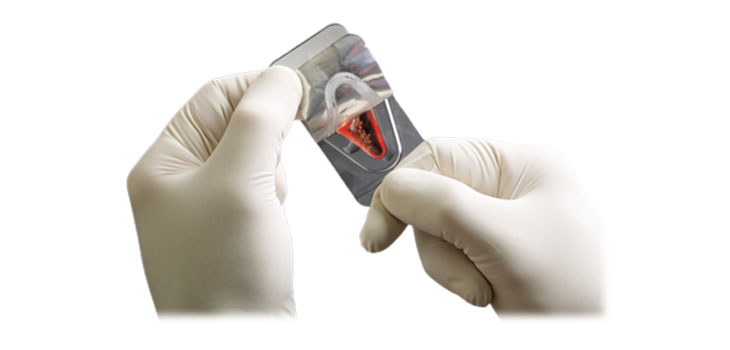
De Novo NT is an FDA approved cartilage repair technique. The product is made out of minced cartilage from organ donors under the age of 13. Unlike cartilage in adults, this young tissue has a high proliferative capacity. Cells from the transplanted cartilage migrate into surrounding area tissues, multiply, and form a new cartilage tissue matrix that integrates with the surrounding host tissue. This technique eliminates the need for harvesting and requires less suturing because the product uses a fibrin sealant to secure the particulated tissue pieces into the lesion. Fibrin is an insoluble “sticky” protein involved in the clotting of blood.
“The small pieces of juvenile cartilage are less than a millimeter in size, and what happens is the cells can migrate out of these small pieces of cartilage, ” said Rodeo. “We are trying to take advantage of the high proliferative capacity of the tissue.” The tissue graft falls into a category of products that does not have to undergo the rigorous clinical trial process through which drugs, for example, are approved.
In the study clinicians used De Novo NT to treat 17 patients who had cartilage damage on the kneecap. The average lesion size was 203 millimeters. Clinicians compared symptom assessment survey data and MRI images at baseline and at two years of follow up and identified improvements in all patients.
At two years of follow up, patients had roughly a 30% improvement in scores from the international knee documentation committee health evaluation form, a 20% improvement in the international knee documentation committee (IKDC) subjective form, and a 25% Knee Outcome Survey form. “The improvements are clinically significant, as well as statistically significant, ” said Rodeo who noted that the adverse events seen in patients, such as swelling and inflammation, were typical postoperative complications seen after other cartilage repair strategies.
Author
React:
Discussion
This is a fascinating development. In my practice we've seen similar outcomes with the revised protocol. The key differentiator seems to be patient selection criteria. Has anyone else noticed the correlation with BMI thresholds?
Great point. I'd push back slightly on the conclusion, the sample size in the cited study is too small to draw population-level inferences. That said, the directional signal is compelling and worth a larger RCT.
We implemented a similar approach last year. Early results are promising but we're still gathering 12-month follow-up data. Happy to share our protocol if anyone is interested.
Join the conversation
Orthopedic professionals are discussing this. Sign in and upgrade to read every comment and add your voice.