
Researchers from the UK have conducted a meta-analysis showing that wedge insoles may not go far in reducing knee pain. This work, published in the August 21, 2013 issue of the Journal of the American Medical Association found that among trials comparing wedge insoles with neutral insoles, there was no significant or clinically important association between use of wedge insoles and reduction in knee pain.
Insoles Not So Helpful With OA
2 min read Premium comments
Secondary
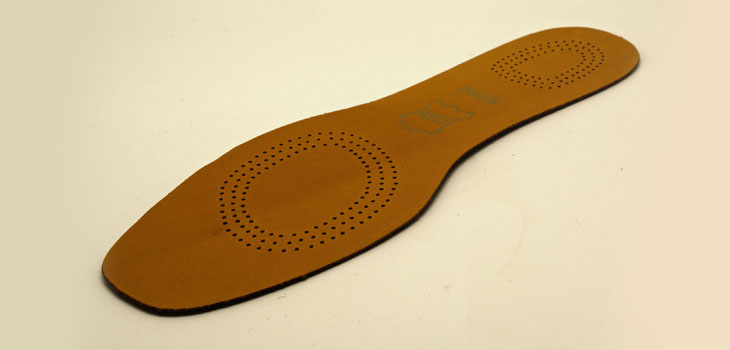
The study authors note: “The increase in rates of knee replacement for osteoarthritis [OA] has made the identification of effective nonsurgical treatments a high priority. Medial osteoarthritis is one of the most common subtypes of knee osteoarthritis. One type of treatment for medial knee osteoarthritis involves reducing medial (inner) loading to ease the physical stress applied to that compartment of the joint. The wedge is placed under the sole of the foot and angulated so that it is thicker over the lateral than the medial edge, transferring loading during weight bearing from the medial to the lateral knee compartment.”
Matthew J. Parkes, B.Sc., of the University of Manchester, England, and colleagues set out to assess the efficacy of lateral wedge treatments (shoes and insoles designed to reduce medial knee compartment loading) in reducing knee pain in patients with medial knee osteoarthritis. The authors conducted a search of the medical literature to identify randomized trials that compared shoe-based treatments (lateral heel wedge insoles or shoes with variable stiffness soles) aimed at reducing medial knee load, with a neutral or no wedge control condition. The wedge needed to be of 5° to 15° of angulation, which is a level shown in previous studies to reduce external knee adduction moment (torque). Studies must have included patient-reported pain as an outcome. Twelve trials met inclusion criteria with a total of 885 participants of whom 502 received lateral wedge treatment.
The researchers found, when considering all 12 trials, the overall effect estimate was a standard mean difference in pain between interventions that showed a moderately significant effect of a lateral wedge on pain reduction. However, the findings were highly heterogeneous across studies. Larger trials with a lower risk of bias suggested a null association.
When trials were grouped according to the control group treatment, the authors found that compared with neutral inserts, lateral wedges had no association with knee pain and heterogeneity was much lower across trial findings.
Matt Parkes told OTW, “The fact that the flat vs. wedged insole trials were so consistent in showing no superiority of wedges over flat insoles was perhaps unexpected, given the wide-ranging opinions both in support of and against wedges. So, aside from a placebo effect, wedge insoles provide little arthritis pain relief.”
React:
Discussion
This is a fascinating development. In my practice we've seen similar outcomes with the revised protocol. The key differentiator seems to be patient selection criteria. Has anyone else noticed the correlation with BMI thresholds?
Great point. I'd push back slightly on the conclusion, the sample size in the cited study is too small to draw population-level inferences. That said, the directional signal is compelling and worth a larger RCT.
We implemented a similar approach last year. Early results are promising but we're still gathering 12-month follow-up data. Happy to share our protocol if anyone is interested.
Join the conversation
Orthopedic professionals are discussing this. Sign in and upgrade to read every comment and add your voice.