
Stryker Australia and Australia’s regulatory agency, the Therapeutic Goods Administration (TGA), issued a hazard alert regarding the company’s Oasys Midline Occipital Plate in July.
Australian Hazard Alert for Stryker Spine Plate
1 min read Premium comments
Secondary
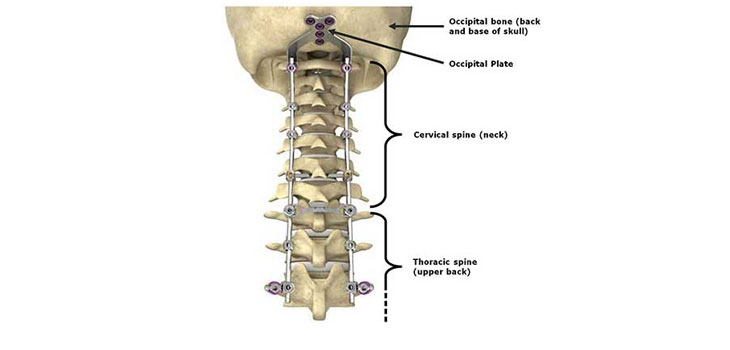
An Oasys Midline Occipital Plate is a part of the Oasys System, which is used in spinal surgery to promote fusion and provide stabilization at the junction between the occipital bone and the vertebrae in the cervical and thoracic spine.
Post-Operative Pin Fracture
Stryker received reports from the field in the U.S. and Belgium indicating post-operative fracture of the pin that connects the tulip head to the plate body, either as a result of an excess acute load or excess repetitive load (fatigue fracture). This can lead to destabilization of the plate and revision surgery may be required.
The root cause of the problem is not yet known and the manufacturer is continuing to investigate reported cases from the USA and Belgium. At the time of this hazard alert, no cases of this problem had been reported in Australia.
Stryker Australia has contacted surgeons who have implanted an Oasys Midline Occipital Plate, providing further information regarding this recall and advice on how to treat affected patients.
To minimize risk to patients, Stryker Australia has removed this device from the market until the definitive root cause is identified.
If a surgeon has already implanted one of the plates, he or she is advised to continue undertaking routine clinical and radiographic post-operative evaluation of patients.
For more information, click here.
Author
React:
Discussion
This is a fascinating development. In my practice we've seen similar outcomes with the revised protocol. The key differentiator seems to be patient selection criteria. Has anyone else noticed the correlation with BMI thresholds?
Great point. I'd push back slightly on the conclusion, the sample size in the cited study is too small to draw population-level inferences. That said, the directional signal is compelling and worth a larger RCT.
We implemented a similar approach last year. Early results are promising but we're still gathering 12-month follow-up data. Happy to share our protocol if anyone is interested.
Join the conversation
Orthopedic professionals are discussing this. Sign in and upgrade to read every comment and add your voice.