
Three-D printing of human organs is advancing at an astounding pace. Hangzhou Dianzi University in China has a Regenovo printer that prints living tissue—such as replacement ears. Cornell University in New York has a similar tissue printer and in Belgium an 83-year-old woman is chewing, speaking and breathing normally with a new jawbone fashioned by a 3D printer from titanium powder and stem cells.
3D Printer Makes Human Jawbone
1 min read Premium comments
Secondary
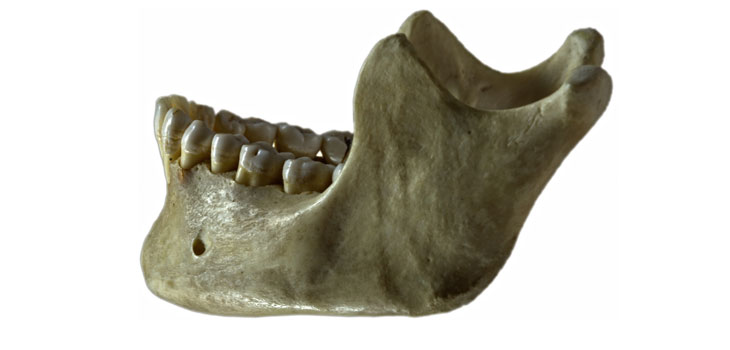
Doctors fed an MRI scan of the women’s damaged jawbone into a laser 3D printer which deposited titanium particles, layer by layer, until the printer had recreated the shape of her jawbone. They coated the implant with a biocompatible ceramic layer, steeped it in stem cells and placed it in the abdomen of the recipient where it grew biocompatible tissue. The implant had cavities that promoted muscle attachment, openings that allowed mandibular nerves to enter and support structures for dental implants.
Hules Poukens, the researcher who led the operation at Biomed, the biomedical research department of the University of Hasselt in Belgium, said, “This is a world premiere, the first time a patient-specific implant has replaced the entire lower jaw. It’s a cautious, but firm step.” The surgery was performed in June 2011, but has only recently been reported. According to globaleconomicanalysis.blogspot.com, the team was astonished at the success of the four-hour jaw implant operation.
Author
React:
Discussion
This is a fascinating development. In my practice we've seen similar outcomes with the revised protocol. The key differentiator seems to be patient selection criteria. Has anyone else noticed the correlation with BMI thresholds?
Great point. I'd push back slightly on the conclusion, the sample size in the cited study is too small to draw population-level inferences. That said, the directional signal is compelling and worth a larger RCT.
We implemented a similar approach last year. Early results are promising but we're still gathering 12-month follow-up data. Happy to share our protocol if anyone is interested.
Join the conversation
Orthopedic professionals are discussing this. Sign in and upgrade to read every comment and add your voice.