
Titan Spine, LLC of Mequon, Wisconsin, is celebrating the awarding of four new patents by the U.S. Patent and Trademark Office. The patents relate to the surface textures of the firm’s spine implants as well as the design of its ENDOSKELETON interbody device and system instrumentation. Titan Spine now holds 10 patents and has an additional 14 applications under review.
Titan Spine Awarded 4 (!) New Patents
1 min read Premium comments
Secondary
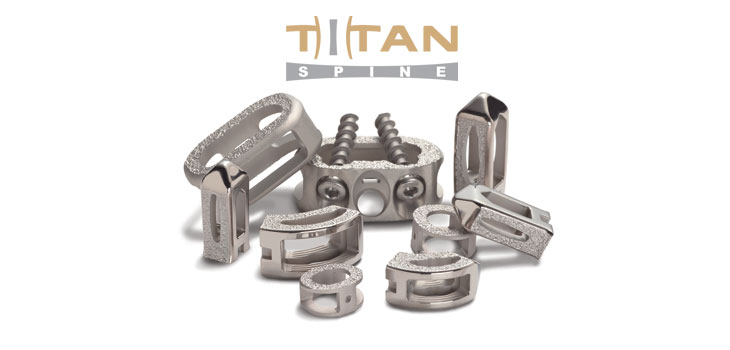
One patent covers aspects of the roughened surface of the implant. The implant features a combination of macro, micro and cellular-level textures on its surface which, company officials say, help induce the production of biologically active proteins necessary for bone growth.
Barbara Boyan, Ph.D., Dean of the School of Engineering at Virginia Commonwealth University, said, “The specific combination of Titan Spine’s surface textures produces a distinct biological response at the implant site . In-vitro research supports this difference between Titan’s devices and other interbody cages beginning at the cellular level, which may extend to an improved environment for fusion.”
Paul Slosar, M.D., orthopedic surgeon at SpineCare Medical Group and medical director for Titan Spine, commented, “The science behind Titan Spine’s implants is translating into significant clinical benefits. In my experience, patients are fusing more quickly and exhibiting robust fusion, with meaningful, sustained pain reduction and functional improvement. While traditional interbody cages serve mainly to provide structure to the fusion site, Titan’s devices also enhance the fusion process and represent the future of spine implant development.”
Chad Patterson, director of Product Development and Operations for Titan Spine, said, “Our surface treatment technology and interbody device design are truly unique in spinal care, as confirmed by the award of these new patents. We are pleased to be a leader in interbody IP and excited to continue to innovate and expand our portfolio to further pioneer the application of surface technology, implant design and advanced surgical techniques speeding patient recovery in spine care.”
Author
React:
Discussion
This is a fascinating development. In my practice we've seen similar outcomes with the revised protocol. The key differentiator seems to be patient selection criteria. Has anyone else noticed the correlation with BMI thresholds?
Great point. I'd push back slightly on the conclusion, the sample size in the cited study is too small to draw population-level inferences. That said, the directional signal is compelling and worth a larger RCT.
We implemented a similar approach last year. Early results are promising but we're still gathering 12-month follow-up data. Happy to share our protocol if anyone is interested.
Join the conversation
Orthopedic professionals are discussing this. Sign in and upgrade to read every comment and add your voice.