
Med students will be grateful as will surgeons developing less invasive surgical techniques. The object of their appreciation is ChromaVasc, a technique developed by MedCure, Inc. that highlights the arterial and venous system throughout the entire body of cadaveric, whole body donors.
Med Students Delight – Cadaveric Vessels Colorized
1 min read Premium comments
Secondary
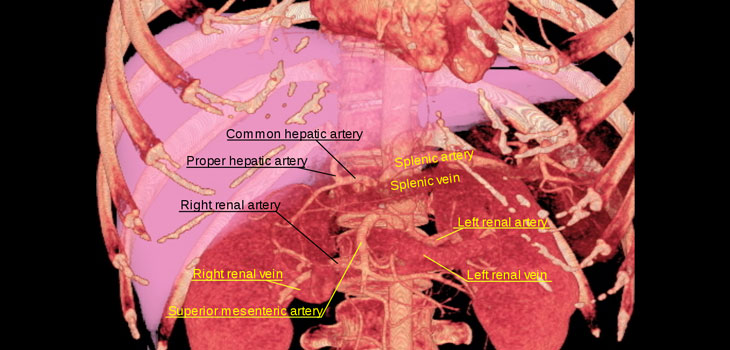
To the dismay of medical students, the veins and arteries in a cadaver look quite different from how they look in a living patient. In a cadaver the veins and arteries tend to collapse and deteriorate making them difficult to identify. When colorized through ChromaVasc they regain their normal contours and more closely resemble living veins and arteries, even with elasticity and flexibility, according to a company release.
“This procedure offers tremendous benefits to the students, staff, and faculty of any medical/nursing schools, universities, training centers, and surgeons/physicians in practice, ” says Karim Muradian, M.D., lab manager of MedCure’s Surgical Training Center in Henderson, Nevada. “The brightly colored vessels will allow the medical practitioner to immediately identify any vessel and easily follow its entire course from the heart to the target organ, ” he said.
Company officials claim that ChromaVasc provides information that would be difficult to observe in a non-injected cadaveric specimen which is helpful to physicians in surgical training. Blue color is injected into the venous system while red color is injected in the arterial. The color solution is as far reaching as the arteries of the sclera, finger and toe tips as well as the brain, digestive, renal, and neurological systems.
“Anatomical knowledge will always remain integral to surgical training and as surgical practices evolve and innovate, so must our tools, ” say MedCure officials.
Author
React:
Discussion
This is a fascinating development. In my practice we've seen similar outcomes with the revised protocol. The key differentiator seems to be patient selection criteria. Has anyone else noticed the correlation with BMI thresholds?
Great point. I'd push back slightly on the conclusion, the sample size in the cited study is too small to draw population-level inferences. That said, the directional signal is compelling and worth a larger RCT.
We implemented a similar approach last year. Early results are promising but we're still gathering 12-month follow-up data. Happy to share our protocol if anyone is interested.
Join the conversation
Orthopedic professionals are discussing this. Sign in and upgrade to read every comment and add your voice.