
Jo A. Hannafin, M.D., Ph.D., an orthopedic surgeon at Hospital for Special Surgery (HSS), has been named the first female president of the American Orthopaedic Society for Sports Medicine (AOSSM). Dr. Hannafin is director of Orthopedic Research at Hospital for Special Surgery and prthopedic director of the Women’s Sports Medicine Center at HSS.
Jo A. Hannafin, M.D., Ph.D.: First Female President of AOSSM
2 min read Premium comments
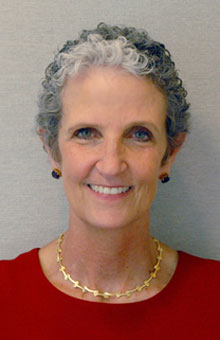
Dr. Hannafin is head team physician for the Women’s National Basketball Association New York Liberty; she also serves as a team physician for the United States Rowing Team. She previously was an assistant team physician for the New York Mets and team physician for the WUSA NY Power.
She has a personal goal as president. “I would like to focus on improving member fellowship. The missions of the AOSSM include education, research, patient care and fellowship. By fellowship, I don’t mean fellowship training, but fellowship in a community of like-minded people—the fellowship among sports medicine physicians, ” she explained in the July 10, 2013 news release. Dr. Hannafin also wants to further strengthen the organization and to ensure that it offers innovative and intellectually challenging meetings that are well attended.
Dr. Hannafin told OTW, “The quality of the research abstracts received and accepted for presentation set the tone of the meeting. The use of symposia reviewing the latest surgical treatments that incorporate scientific data, surgical video and debate provide an excellent educational forum. My goal for the AOSSM Specialty Day and the Annual meeting is to optimize the use of available time to provide high quality information to our members. This will take the form of research presentations, symposia, live surgical demonstrations and high level debate on controversial or cutting edge topics.”
Asked about her research goals for AOSSM, Dr. Hannafin commented to OTW, “Research has been a critical component of my academic career and forms the basis for what we do as sports medicine surgeons. When I chaired the Research Committee, we created and the Board agreed to fund a three year research initiative. This program has been expanded and strengthened by the Research Committee Chairs who followed me. The Research Committee of the AOSSM is one of our strengths and will be led for the next three years by Rob LaPrade, M.D. We are fortunate to have Bart Mann, Ph.D. as our full time Research Director. The Research Committee formulates a plan and topic for our three year research initiative which is supported by a 250, 000 grant awarded during each cycle. There is a research meeting held which will bring together experts in the selected topic and researchers interested in that area. We have traditionally invited members of the scientific staff at the NIH to attend these meetings. The goal of this ‘think tank’ is to bring together investigators from different institutions and to facilitate proposals for funding that are multi-institutional or multi-disciplinary in design. This process has been a springboard for application for federal funding by our members. In addition, in the appropriate forum I will continue to lobby for the importance of support of both clinical, translational and basic research which provide an essential foundation for appropriate patient care.”
React:
Discussion
This is a fascinating development. In my practice we've seen similar outcomes with the revised protocol. The key differentiator seems to be patient selection criteria. Has anyone else noticed the correlation with BMI thresholds?
Great point. I'd push back slightly on the conclusion, the sample size in the cited study is too small to draw population-level inferences. That said, the directional signal is compelling and worth a larger RCT.
We implemented a similar approach last year. Early results are promising but we're still gathering 12-month follow-up data. Happy to share our protocol if anyone is interested.
Join the conversation
Orthopedic professionals are discussing this. Sign in and upgrade to read every comment and add your voice.