
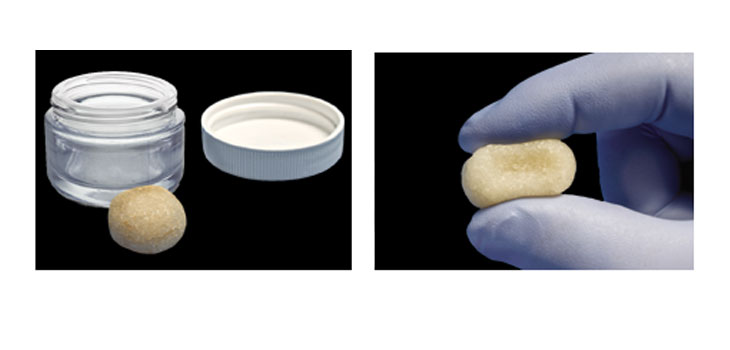
Bacterin International Holdings, Inc. has received FDA 510(k) clearance to market its OsteoSelect DBM Putty for use in spinal fusion.
Bacterin’s DBM Putty Cleared for Spinal Fusion
2 min read Premium comments
Secondary
The putty, comprised of demineralized bone matrix (DBM) allograft is a moldable bone graft substitute designed to withstand irrigation while exhibiting osteoinductive properties for improved bone regeneration. In a July 16, 2013 press release, the company states the cohesive nature of the product provides an advantage over other commercially available DBM putties which can readily wash away after placement in wet, surgical environments.
The osteoinductive potential of every lot of the putty is confirmed after sterilization in an animal model, according to the company, thus providing surgeons with a bone grafting solution that is both safe and biologically active.
As part of the regulatory approval process, Bacterin provided funding to Hospital for Special Surgery in New York to perform a study evaluating the efficacy of OsteoSelect in a rabbit posterolateral lumbar spine fusion model. Biomechanical, radiographic, and histological analysis indicated that OsteoSelect showed equivalence to a control of autologous iliac crest bone graft.
Obtaining another indication for the use of the product will provide Bacterin with additional marketing opportunities, commented Gregory Juda, Ph.D., Bacterin’s chief scientific officer. “In the three-plus years of OsteoSelect being on the market, we have seen considerable adoption by the orthopedic community across a variety of surgical specialties. Our post market surveillance supports the efficacy of OsteoSelect and the results of the preclinical work validate the clinical findings.”
Mechanical and biological characteristics of the product include:
- Osteoinductive
- Device-level sterility (SAL 10-6)
- Exceptional handling characteristics
- Sterile, room-temperature storage
- Will not dissipate upon direct irrigation
- Contains 74% DBM by dry weight
The company develops, manufactures and markets biologics products to domestic and international markets. According to the company, its proprietary methods optimize the growth factors in human allografts to create the ideal stem cell scaffold to promote bone, subchondral repair and dermal growth. These products are used in a variety of applications including enhancing fusion in spine surgery, relief of back pain, promotion of bone growth in foot and ankle surgery, promotion of cranial healing following neurosurgery and subchondral repair in knee and other joint surgeries.
Author
React:
Discussion
This is a fascinating development. In my practice we've seen similar outcomes with the revised protocol. The key differentiator seems to be patient selection criteria. Has anyone else noticed the correlation with BMI thresholds?
Great point. I'd push back slightly on the conclusion, the sample size in the cited study is too small to draw population-level inferences. That said, the directional signal is compelling and worth a larger RCT.
We implemented a similar approach last year. Early results are promising but we're still gathering 12-month follow-up data. Happy to share our protocol if anyone is interested.
Join the conversation
Orthopedic professionals are discussing this. Sign in and upgrade to read every comment and add your voice.