
On June 9, 2013 the orthopedic world was jolted by the sudden loss of Harry N. Herkowitz, M.D., the much-loved chairman of Orthopaedic Surgery at Beaumont Hospital in Royal Oak, Michigan. Dr. Herkowitz, who was 65 years old, is survived by his wife Jan, son Seth (Laura) and daughter Rachael (Michael – fiancé).
Spine World Loses Luminary: Harry Herkowitz, M.D.
3 min read Premium comments
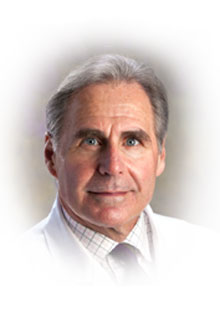
Remembrances
A luminary of the spine world, Dr. Herkowitz specialized in the surgical management of spinal disorders including spinal stenosis, herniated discs, deformity and trauma to the neck and back. Many who walk the halls of orthopedics programs nationwide continue to benefit from his extensive contributions to the field.
Dr. Herkowitz assumed the chairmanship of the department of Orthopaedic Surgery at Beaumont in 1991 and directed that institution’s spine surgery fellowship program from 1987 to 2008. His talents and leadership insight also led him to prominence as president of the Cervical Spine Research Society, the International Society for the Study of the Lumbar Spine and the American Board of Orthopaedic Surgery.
Dr. Herkowitz’s research legacies include contributions to degenerative solutions to aging discs and improving spinal implants. He gained renown with his 1991 landmark study on the treatment of degenerative spondylolisthesis, work which continues to influence current research. The name “Harry Herkowitz, M.D.” appeared under the titles of many respected articles in the peer-reviewed literature; he also presented at hundreds of conferences. Dr. Herkowitz also edited a dozen major textbooks on the spine, and served as editor or on the editorial board of major orthopedic and spine journals. He was a graduate of Wayne State University School of Medicine, did his residency at Beaumont, and completed a spine surgery fellowship at Pennsylvania Hospital in Philadelphia.
Dr. Herkowitz was honored with an Outstanding Academic Excellence Award by Beaumont in 2011. He was also named among the 100 Best Spine Surgeons in America, recognized by Best Doctors in America, and was twice honored with the Volvo Award for Clinical Research in Low Back Pain.
Steve Garfin, M.D., chair of the department of orthopedic surgery at the University of California, San Diego, was a dear friend of Harry Herkowitz for 35 years. “He was a surgeon’s surgeon, leader’s leader, clinical scientist’s clinical scientist, a great and loyal and true friend, beat everyone at hard work, but was a wonderful (and wonder as a) father, husband, family/friend, and respected/admired by all.”
Remembering his friend with warmth, Dr. Garfin says, “He was very predictable and repetitive and had a touch of obsessiveness. At meetings or events, no matter what restaurant, or style of it, he always got salmon if it was there—always. Then there was Sunday. As busy as he was, and how much he had a cast of people doing things for him, he always went to Costco, by himself, fighting Sunday crowds to look around and see what they had and what the bargains/specials were, but the bargains/specials didn’t matter. He always bought the same things—water, Kleenex, and other surprisingly simple basics—always.”
Todd Albert, M.D. is president of the Rothman Institute in Philadelphia and chair of the Department of Orthopaedic Surgery at Thomas Jefferson University. His thoughts: “Harry Herkowitz was a great friend, father, husband and an icon in orthopaedic surgery. While working in a private practice, he created sentinel scientific works on the treatment of degenerative spondylolithesis and degenerative cervical disease. He was a leader in multiple societies and on the American Board of Orthopaedic Surgery. Most importantly he was a thread that bound together a great tradition of those trained by Dick Rothman and their progeny. He made a huge effort to be welcoming and mentoring to all.”
John Heller, M.D. is professor of orthopedic surgery at Emory University. He muses, “Dr. Herkowitz meant so much to so many. Words that come to mind include friendship, service, leadership, scholarship, excellence and loyalty. Whether you are among the countless patients he served, or those served by the surgeons he inspired or trained, Dr. Herkowitz simply changed lives. He changed the course of contemporary spine surgery through his research, his service to the American Board of Orthopaedic Surgery and leadership in numerous other professional organizations. He was the consummate mentor, a devoted family man and a true friend. We are all diminished by his passing. At ten years my senior, he was always cordial, supportive, willing to open doors, etc. His professional life was about paying forward the principles and behaviors of his primary mentor, Richard Rothman.”
The spine world will go on, but is today a bit less rich in experience and ideas than before his passing.
Those who wish to further honor the memory of Dr. Harry Herkowitz may do so by making a contribution to:
Beaumont Foundation
Dr. Harry Herkowitz Fund
3711 West 13 Mile Road
Royal Oak, MI 48073
248-551-5330
http://foundation.beaumont.edu/
React:
Discussion
This is a fascinating development. In my practice we've seen similar outcomes with the revised protocol. The key differentiator seems to be patient selection criteria. Has anyone else noticed the correlation with BMI thresholds?
Great point. I'd push back slightly on the conclusion, the sample size in the cited study is too small to draw population-level inferences. That said, the directional signal is compelling and worth a larger RCT.
We implemented a similar approach last year. Early results are promising but we're still gathering 12-month follow-up data. Happy to share our protocol if anyone is interested.
Join the conversation
Orthopedic professionals are discussing this. Sign in and upgrade to read every comment and add your voice.