
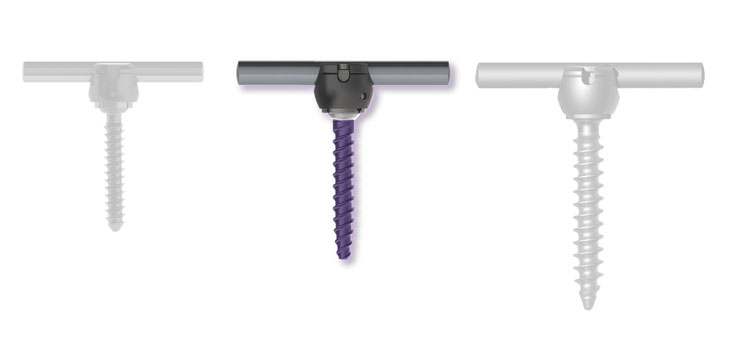
Small persons with large back pain, take heart. K2M, Inc. is coming to the rescue. The company has announced the launch of the MESA Small Stature Spinal System in the Australian, New Zealand, and European spine markets. This is the company’s first posterior spinal fixation product available for small stature patients. It boasts a 4.5 mm pedicle screw system, provides surgeons with the lowest profile alternative for treating small stature patients and, coupled with K2M’s Zero-Torque Technology, it is designed to address the most difficult correction maneuvers.
Small Stature? K2M to the Rescue
1 min read Premium comments
Secondary
“At last, a system powerful enough to get the job done and elegant enough to look the part. When used with the 4.5 mm MESA Rail, I have a more powerful system than with a 5.5 mm titanium rod and a lower profile than standard 3.5 mm top loading systems. It shares the load like a Luque construct, allowing coupled multi-planar correction, ” stated Dr. John Ferguson, Orthopedic Spine Surgeon in Auckland, New Zealand, in the May 29, 2013 news release.
According to Laurel Blakemore, M.D., Chief of Orthopedics and Sports Medicine at Children’s National Medical Center in Washington, DC, “The MESA Small Stature Spinal System provides an extremely low profile, versatile construct option for my smaller patients.”
Stated Eric Major, K2M’s president and CEO. “Providing innovative technologies to meet patient needs continues to be a top priority for K2M and this international growth reinforces our goal to offer the best solutions for the most complex spinal pathologies around the world.”
A K2M representative told OTW, “We estimate the global small stature spinal device market to be over $400 million.”
React:
Discussion
This is a fascinating development. In my practice we've seen similar outcomes with the revised protocol. The key differentiator seems to be patient selection criteria. Has anyone else noticed the correlation with BMI thresholds?
Great point. I'd push back slightly on the conclusion, the sample size in the cited study is too small to draw population-level inferences. That said, the directional signal is compelling and worth a larger RCT.
We implemented a similar approach last year. Early results are promising but we're still gathering 12-month follow-up data. Happy to share our protocol if anyone is interested.
Join the conversation
Orthopedic professionals are discussing this. Sign in and upgrade to read every comment and add your voice.