
The knees may be the same—but their rate of replacement varies widely according to Patrick Sadoghi, M.D., commenting on data from an international comparison study he conducted in Europe. He used data from national arthroplasty registers that have been set up in many countries to ensure quality control and to determine how well an implant performs.
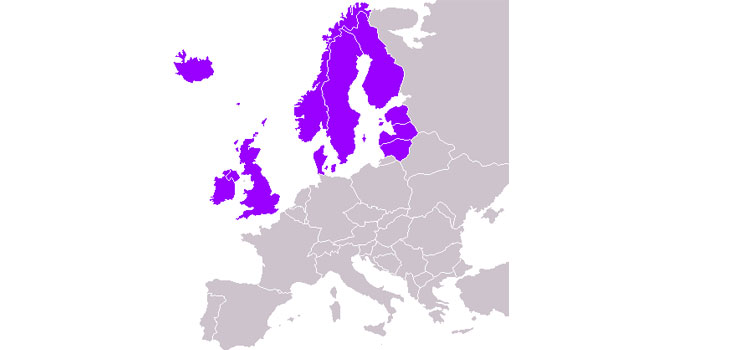
New TKA Stats Show Northern European Bias
2 min read Premium comments
Secondary
For the evaluation he presented in a conference in Istanbul attended by 7, 500 orthopedic specialists, Sadoghi analyzed data from 11 national or regional registers. The comparison shows that the individual countries differ greatly in the number of first-time knee replacements undertaken per year. “The rate varies between 40 and 163 procedures per 100, 000 inhabitants, the average being 106, ” said Sadoghi. Among the countries being compared, total knee replacement is undertaken most frequently in England, Denmark, Norway and Sweden and least frequently in New Zealand, Australia and Canada.
There are also clear-cut fluctuations in the manner in which the prosthesis is fixed in place. The percentage of artificial knee joints fixed in place solely with cement is 90% in New Zealand and only 54% in Australia. There is even greater variation in the way in which the surface of kneecaps is replaced. In Denmark, 72% of all total knee replacement procedures involve replacement of the back side of the kneecap in which the cartilage in the knee cap is replaced. In Norway, this figure is just 2%.
Sadoghi explained the differences—“On the one hand, health care systems are never identical and on the other hand, the insurance status of the people affected may have an impact, as might the fact that physicians show tendencies in treatment typical of their respective country.”
Demography may also play a part in the large range of results. Sadoghi notes that, “Psychological strain varies from country to country, as does life expectancy and even the demands people place on their musculoskeletal system. The respective age distribution is another important factor. It can cause the additional financial burden to rise to such an extent that the indication for the surgical procedure is handled differently and quite a bit more restrictively if resources are scarce.”
The European Federation of National Associations of Orthopaedics and Traumatology (EFORT) is the umbrella organization linking Europe´s national orthopedic societies. EFORT was founded in 1991 in the Italian Marentino. Today it has 42 national member societies from 43 member countries and 6 associate scientific members.
Author
React:
Discussion
This is a fascinating development. In my practice we've seen similar outcomes with the revised protocol. The key differentiator seems to be patient selection criteria. Has anyone else noticed the correlation with BMI thresholds?
Great point. I'd push back slightly on the conclusion, the sample size in the cited study is too small to draw population-level inferences. That said, the directional signal is compelling and worth a larger RCT.
We implemented a similar approach last year. Early results are promising but we're still gathering 12-month follow-up data. Happy to share our protocol if anyone is interested.
Join the conversation
Orthopedic professionals are discussing this. Sign in and upgrade to read every comment and add your voice.