
Cerepedics, Inc., a company located in Westminster, Colorado, that specializes in osteobiologic products based upon its synthetic small peptide technology platform, has added two new executives to its administrative roster. One is Glen A. Kashuba who is the firm’s new chief executive officer. The second is Jeffrey G. Marx, Ph.D., who is the new president and chief operating officer.
Kashuba and Marx Join Cerepedics
1 min read Premium comments
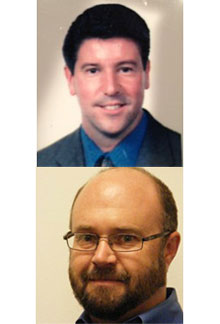
Kashuba formerly served as president of Spine & Bone Healing Technologies, Inc., a Biomet company, while concurrently serving as senior vice president on Biomet’s worldwide operating board. The position encompassed Biomet’s orthopedics, spine, trauma, biologics and sports medicine businesses. While at Biomet, Kashuba had profit and loss responsibility for all functional areas for Biomet Spine and Trauma including sales force management and supply chain optimization. His commercial responsibilities included managing sales of greater than $400 million, driven by more than 500 direct and independent sales representatives. Kashuba was responsible for launching more than 25 new products into the market during his tenure.
Prior to his role at Biomet, Kashuba held a number of division president jobs at Johnson & Johnson where he served as worldwide president for Cordis Endovascular and Neurovascular and as president for Codman Neuro Sciences. Kashuba was also the U.S. president for DePuy Spine. He received his B.S. in industrial engineering from Rutgers University and succeeds Paul Mraz, who has announced his intention to retire from the company.
Jeffrey Marx formerly served as vice president of corporate development at Orthovita, Inc. He had numerous other responsibilities as part of the senior leadership team during his 13-year tenure. Orthovita was a leading orthobiologics and biosurgery company that Stryker acquired for $318 million in 2011.
Following the acquisition, Marx led the integration of Orthovita into Stryker and served as vice president of corporate development at Stryker Orthobiologics. He received his B.S. in ceramic science and engineering from Penn State University and his Ph.D. in ceramic engineering from Missouri University of Science and Technology.
Author
React:
Discussion
This is a fascinating development. In my practice we've seen similar outcomes with the revised protocol. The key differentiator seems to be patient selection criteria. Has anyone else noticed the correlation with BMI thresholds?
Great point. I'd push back slightly on the conclusion, the sample size in the cited study is too small to draw population-level inferences. That said, the directional signal is compelling and worth a larger RCT.
We implemented a similar approach last year. Early results are promising but we're still gathering 12-month follow-up data. Happy to share our protocol if anyone is interested.
Join the conversation
Orthopedic professionals are discussing this. Sign in and upgrade to read every comment and add your voice.