
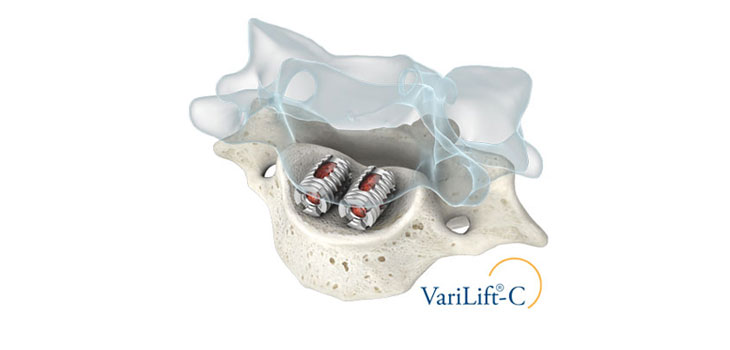
Wenzel Spine, Inc. has launched its VariLift-C stand-alone zero-profile expandable cervical interbody fusion device in the U.S. The company received FDA clearance in January 2013.
Wenzel Launches In Situ Expandable Fusion Device
1 min read Premium comments
Secondary
The device is an interbody fusion device for stand-alone use and may be implanted without supplemental fixation. It is indicated to be implanted as a single device or bilaterally via an anterior approach.
Andy Redmond, M.D., Neurosurgeon at Precision Spine Care in Tyler, Texas, said the device simplifies ACDF (Anterior Cervical Discectomy and Fusion) procedures during cervical fusion surgery by expanding in situ once it’s properly positioned, without the need for anterior plating. “The ease and simplicity of VariLift-C make it an ideal technology for ACDF procedures, particularly in use with adjacent segment disease cases as it allows for the treatment of adjacent levels without the need to remove and replace previous constructs.”
The device, according to the company is the only FDA cleared stand-alone device that expands in situ.
Wenzel Spine CEO Chad Neely said the device, “is the only expandable cervical IBFD (Intervertebral Body Fusion Device) that provides surgeons with a true stand-alone, zero profile technology for use in ACDF cases. VariLift-C also expands options for surgeons to migrate appropriate cases to ambulatory care settings.” Neely added, “Proven stand-alone solutions like VariLift-C that don’t require supplemental fixation are essential for reducing healthcare costs and improving clinical outcomes for today’s surgeons and patients.”
The company made the device available to five U.S. clinical sites in a controlled release. “Surgeon feedback was highly encouraging as they identified that VariLift-C provides a streamlined ACDF procedure that does not require the use of supplemental fixation, ” stated the company announcement.
Wenzel Spine is backed by the Austin-based healthcare venture capital firm TEXO Ventures.
Author
React:
Discussion
This is a fascinating development. In my practice we've seen similar outcomes with the revised protocol. The key differentiator seems to be patient selection criteria. Has anyone else noticed the correlation with BMI thresholds?
Great point. I'd push back slightly on the conclusion, the sample size in the cited study is too small to draw population-level inferences. That said, the directional signal is compelling and worth a larger RCT.
We implemented a similar approach last year. Early results are promising but we're still gathering 12-month follow-up data. Happy to share our protocol if anyone is interested.
Join the conversation
Orthopedic professionals are discussing this. Sign in and upgrade to read every comment and add your voice.