
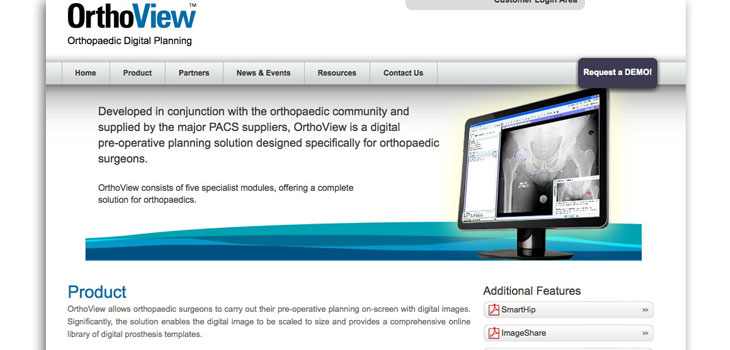
OrthoView, a company providing digital pre-operative planning software, is announcing the launch of OrthoView PSL (private user license), a subscription-based OrthoView templating solution meant to ease the pre-operative planning process. According to the company, there are over 5, 000 orthopedic surgeons in the U.S. now using OrthoView, and the software is installed worldwide in over 1, 850 hospitals and clinics.
OrthoView Advances Pre-Operative Planning
1 min read Premium comments
Secondary
With OrthoView PSL orthopedic surgeons can make the decision to start creating their pre-operative plans by simply downloading the program; templating with digital images is possible within a matter of hours.
Currently only available to orthopedic surgeons in private practice in the U.S., OrthoView PSL is one of a range of purchase and licensing options available from OrthoView, LLC, based in Jacksonville, Florida.
OrthoView PSL is a single-user license without PACS connectivity. Digital x-ray images are imported into the solution from the surgeon’s computer or a DICOM CD and the resulting plan can be printed or saved along with the images.
React:
Discussion
This is a fascinating development. In my practice we've seen similar outcomes with the revised protocol. The key differentiator seems to be patient selection criteria. Has anyone else noticed the correlation with BMI thresholds?
Great point. I'd push back slightly on the conclusion, the sample size in the cited study is too small to draw population-level inferences. That said, the directional signal is compelling and worth a larger RCT.
We implemented a similar approach last year. Early results are promising but we're still gathering 12-month follow-up data. Happy to share our protocol if anyone is interested.
Join the conversation
Orthopedic professionals are discussing this. Sign in and upgrade to read every comment and add your voice.