
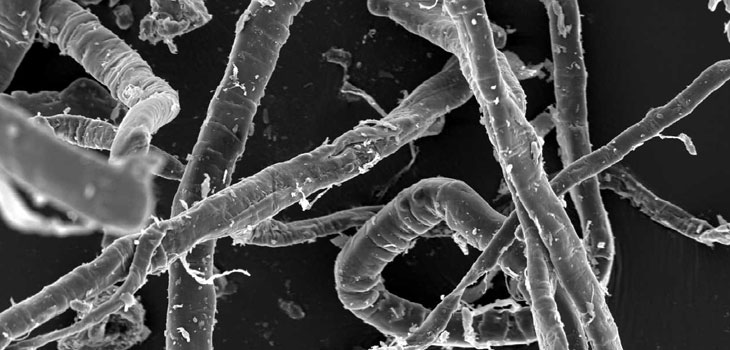
Stem cells need a partner if they are to be biologically effective as regenerators of cartilage tissue. University of Bristol researchers in the United Kingdom believe they may have found that partner. In a study published in Biomacromolecules they explored the feasibility of using naturally occurring fibers such as cellulose and silk for stem cell scaffolds—the matrix to which stem cells can cling as they grow.
Natural Fibers Good Stem Cell Matrix
1 min read Premium comments
Secondary
The team treated blends of silk and cellulose for use as a tiny scaffold that allows adult connective tissue stem cells to form into a preliminary form of chondrocytes—the cells that make healthy tissue cartilage—and secrete extracellular matrix similar to natural cartilage.
Wael Kafienah, M.D., lead author from the University’s School of Cellular and Molecular Medicine, said: “We were surprised with this finding, the blend seems to provide complex chemical and mechanical cues that induce stem cell differentiation into preliminary form of chondrocytes without need for biochemical induction using expensive soluble differentiation factors. This new blend can cut the cost for health providers and makes progress towards effective cell-based therapy for cartilage repair a step closer.”
Sameer Rahatekar, Ph.D., lead author from the University’s Advanced Composite Centre for Innovation and Science, added: “We used ionic liquids for the first time to produce cellulose and silk scaffolds for stem cells differentiation. These liquids are effective in dissolving biopolymers and are environmentally benign compared to traditional solvents used for processing of cellulose and silk.”
The teams are currently working on the fabrication of 3D structures from the blend suitable for implantation in patients’ joints. Future studies will focus on understanding the peculiar interactions between the blend and stem cells towards refining the quality of the regenerated cartilage. Over 20 million people in Europe suffer from osteoarthritis which can lead to extensive damage to the knee and hip cartilage.
Author
React:
Discussion
This is a fascinating development. In my practice we've seen similar outcomes with the revised protocol. The key differentiator seems to be patient selection criteria. Has anyone else noticed the correlation with BMI thresholds?
Great point. I'd push back slightly on the conclusion, the sample size in the cited study is too small to draw population-level inferences. That said, the directional signal is compelling and worth a larger RCT.
We implemented a similar approach last year. Early results are promising but we're still gathering 12-month follow-up data. Happy to share our protocol if anyone is interested.
Join the conversation
Orthopedic professionals are discussing this. Sign in and upgrade to read every comment and add your voice.