
India has the dubious distinction of having more than 63 million people living with diabetes, according to Shobha Shukla, writing for Citizen News Service. India is second only to China in the number of people living with diabetes which, being a disease of the blood vessels, often results in destroyed hind foot bones.
India Surgeon Reconstructs Ankle Bones
3 min read Premium comments
Secondary
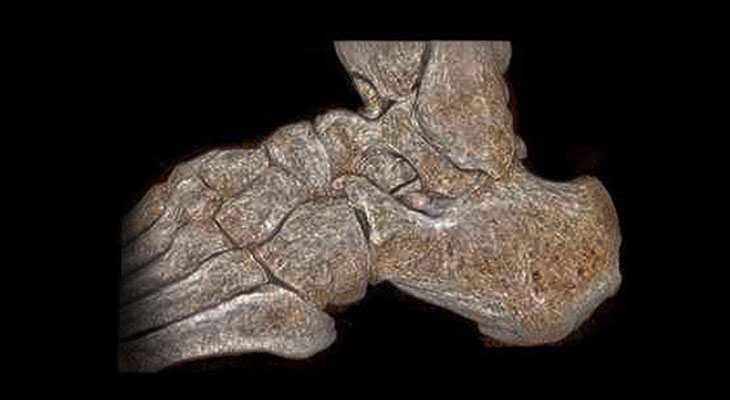
While osteomyelitis in the diabetic foot can vary from 18% to 68%, the diabetic foot is also prone to Charcot’s osteoarthropathy—a severe complication of diabetes which leads to soft and brittle foot and ankle bones. Both of these conditions can result in the destruction or excision of foot bones and in amputation of the infected part. Shukla writes that an estimated 50, 000 amputations occur every year in India due to diabetes-related foot problems.
Enter diabetic lower limb and foot and ankle reconstructive surgeon Professor Ajit Kumar Varma, M.D. of the Department of Endocrinology and Podiatric Surgery at the Amrita Institute of Medical Sciences (AIMS), Kochi, Kerala. This is the only center in India where a new type of reconstructive and corrective foot and ankle surgery is being performed in large numbers in high-risk diabetic foot patients.
Varma has pioneered a novel foot and ankle reconstruction surgery, using poly methyl methacrylate (PMMA) as a foot bone replacement prosthesis for severely destroyed foot and ankle bones. By employing these novel surgical techniques a large number of amputations in patients living with diabetic foot ulcers and deformed diabetic feet are being prevented. AIMS has been able to maintain a lower-limb salvage rate of 91.5%, in diabetic foot and ankle diseases.
PMMA is a powder that hardens with an exothermic reaction when a monomer reagent is added to it, forming a hard substance with a consistency similar to bone. Before setting and hardening completely it may be molded to the desired shape. This material is almost inert and has excellent tissue compatibility, according to Varma.
Poly methyl methacrylate antibiotic laden cement (PMMA-ALC) is formed when bone culture specific heat stable antibiotics are added to the bone cement in cases with osteomyelitis. According to Shukla, this modality has been shown to be very effective in chronic and acute osteomyelitis where sustained higher bone and tissue concentrations can be achieved compared to systemic administration. Prophylactic antibiotics may be added when the prosthesis is made for replacing the non-infected, destroyed bones of a Charcot foot.
In the last three years, Varma has successfully replaced the destroyed foot and ankle bones in more than fifteen patients with the help of a technique called the “Amrita Sling” devised by the Amrita Podiatric Surgery Team. The prosthesis is fixed to the lower end of the tibia to form an ankle joint. Patients have not reported any complications after these foot and ankle reconstruction surgeries using PMMA prosthesis, and, according to the surgeon, all the operated patients are now able to walk normally, using prescribed diabetic footwear. This new surgical technique was published in the international Journal of Diabetic Foot Complications, in December 2012.
Dr Varma has another innovation to his credit. He did a reconstruction with PMMA for severely destroyed ankle bones, creating a mobile ankle joint. This PMMA replacement prosthesis for destroyed Charcot’s foot and ankle bones is the first of its kind in the world. The surgical video can be viewed online at: http://www.youtube.com/watch?v=U4tIu6TONbo.
The technique of prosthetic replacement and arthroplasty is an effort to salvage the diabetic foot by replacing the damaged bones rather than simply removing them. With good patient compliance the results have been very encouraging. Being cosmetically more acceptable and having the potential to provide the patients with a biomechanically stable and functional foot is a major advantage of the procedure.
PMMA is approved by the FDA for human use, and is being extensively used in many surgeries including total hip replacement, knee replacement surgeries, spinal and maxillofacial surgeries. However, except for AIMS, PMMA replacement prosthesis has never been used by any other major diabetic foot center in the world for the replacement of destroyed foot and ankle bones, according to Shukla.
Author
React:
Discussion
This is a fascinating development. In my practice we've seen similar outcomes with the revised protocol. The key differentiator seems to be patient selection criteria. Has anyone else noticed the correlation with BMI thresholds?
Great point. I'd push back slightly on the conclusion, the sample size in the cited study is too small to draw population-level inferences. That said, the directional signal is compelling and worth a larger RCT.
We implemented a similar approach last year. Early results are promising but we're still gathering 12-month follow-up data. Happy to share our protocol if anyone is interested.
Join the conversation
Orthopedic professionals are discussing this. Sign in and upgrade to read every comment and add your voice.