
DePuy Orthopaedics, Inc. actually had some good hip news on May 3, 2013, when the company announced FDA Pre-Market (PMA) Supplemental Approval for its Ceramax ceramic-on-ceramic hip system.
DePuy’s Ceramic Hip Gains FDA Supplemental Approval
2 min read Premium comments
Secondary
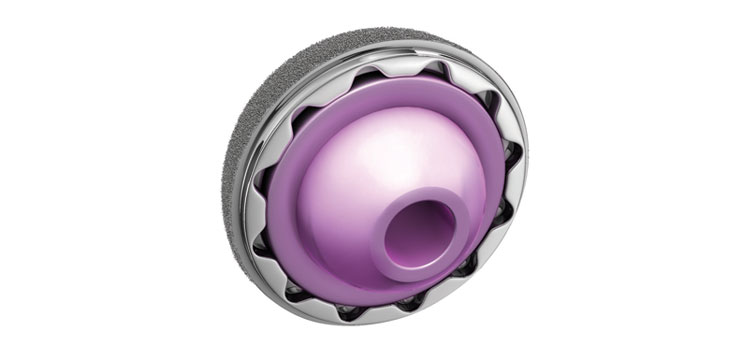
Ceramax Total Hip System
The full product name is the DePuy Ceramax Total Hip System with Biolox delta Ceramic-on-Ceramic 36MM Large Femoral Head. The supplemental approval comes after initial PMA approval of the 28mm size in 2010. Upon launch of the system this summer, the announcement says the company’s Pinnacle Acetabular Cup System will offer the only FDA approved ceramic-on-ceramic bearing surface with Biolox delta Femoral Head. The company says that is a new generation nano composite ceramic material.
Simon Sinclair, DePuy Synthes worldwide vice president of strategic medical affairs, said what makes this product unique is the combination of Pinnacle’s modular bearing system and the use of Biolox delta ceramic head.
According to the company, the key benefits of the device are very high strength and toughness. These properties are achieved as a result of the high density of the material and the very small grain size of the alumina matrix. Since 1974, previous versions of the heads have been used in millions of implants throughout the world.
“DePuy Synthes Joint Reconstruction continues to advance bearing technology, design, materials and manufacturing to help surgeons choose products based on evolving patient demographics and needs, ” said Andrew Ekdahl, worldwide president, DePuy Synthes Joint Reconstruction. “Ceramic-on-ceramic bearings represent nearly 20% of all bearings used outside the U.S.”
Expands Pinnacle Portfolio
The system expands the Pinnacle portfolio of instruments, implants and materials. The company says the Pinnacle system is the most widely used acetabular cup on the world and has been used in more than 1 million patients worldwide.
The safety and effectiveness of the Ceramax system was evaluated in a prospective, multi-center, non-randomized, controlled clinical study of 264 patients who required hip replacement surgery for non-inflammatory degenerative joint disease that compared the system to ceramic-on-polyethylene hip replacement. According to the company, the study, which was part of the company’s PMA application, found no significant differences in adverse events or survivorship between the two groups, and patients experienced similar pain relief, improved function and range of motion. The FDA concluded the system was safe and effective.
Author
React:
Discussion
This is a fascinating development. In my practice we've seen similar outcomes with the revised protocol. The key differentiator seems to be patient selection criteria. Has anyone else noticed the correlation with BMI thresholds?
Great point. I'd push back slightly on the conclusion, the sample size in the cited study is too small to draw population-level inferences. That said, the directional signal is compelling and worth a larger RCT.
We implemented a similar approach last year. Early results are promising but we're still gathering 12-month follow-up data. Happy to share our protocol if anyone is interested.
Join the conversation
Orthopedic professionals are discussing this. Sign in and upgrade to read every comment and add your voice.