
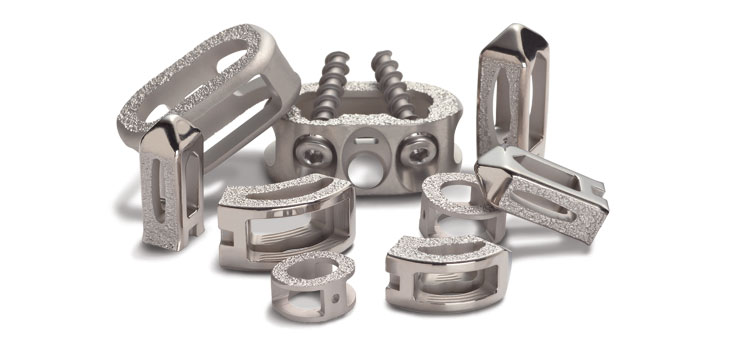
A study of Titan Spine, LLC Endoskeleton titanium interbody cage, presented at the 13th Annual Meeting of the International Society for the Advancement of Spine Surgery, found that the device achieved rapid lumbar fusions.
Study Finds Titan’s Cage Promotes Fusion
2 min read Premium comments
Secondary
The study looked at 77 patients with a mean age of 46 years who underwent an ALIF procedure using the Endoskeleton interbody device. Physicians treated a total of 138 spinal segment levels. Radiographic analysis by two independent radiologists revealed a 100% fusion rate between 6 and 12 months, with no appreciable subsidence and an inter-observer reliability rate of 95%. Researchers also noted that clinical outcomes as determined by ODI and VNS scores improved significantly by 6 months with the improvement sustained at 12 and 24 months follow-ups.
Andrew Shepherd, vice president of marketing for Titan Spine, said, “Titan Spine is focused on optimizing the surface of interbody implants so that they can play an active role in facilitating bone integration and promoting fusion. This prospective study, which echoes similar clinical experiences from other surgeons in the U.S. and abroad, included patients of varying ages and degenerative conditions who all successfully fused and experienced excellent clinical improvement with our device.”
Shepherd said that Titan Spine’s Endoskeleton implants feature a proprietary acid-etched surface that is textured at the macro, micro and cellular levels to support bone purchase and new bone growth. He added that cellular research has demonstrated that the etched surface promotes a superior bone-forming response as compared to smooth titanium.
Lead author of the study Paul Slosar, M.D., of SpineCare Medical Group and the San Francisco Spine Institute in San Francisco, California, said, “This study supports the use of the Endoskeleton device for safe, effective and rapid spinal fusion. It is also important to note that fusion status was able to be determined in all patients due to the design of the implant, which is in contrast to the difficulty in assessing fusion in historical titanium threaded devices. The Endoskeleton’s unique surface has been shown in published cellular research to stimulate improved osteoblast differentiation to support fusion. Our clinical data further substantiates those findings, and demonstrates the notable positive impact on patient outcomes.” Titan Spine is located in Mequon, Wisconsin.
Author
React:
Discussion
This is a fascinating development. In my practice we've seen similar outcomes with the revised protocol. The key differentiator seems to be patient selection criteria. Has anyone else noticed the correlation with BMI thresholds?
Great point. I'd push back slightly on the conclusion, the sample size in the cited study is too small to draw population-level inferences. That said, the directional signal is compelling and worth a larger RCT.
We implemented a similar approach last year. Early results are promising but we're still gathering 12-month follow-up data. Happy to share our protocol if anyone is interested.
Join the conversation
Orthopedic professionals are discussing this. Sign in and upgrade to read every comment and add your voice.