
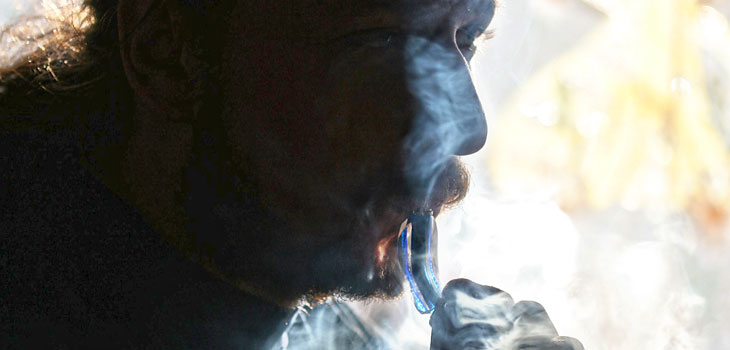
Another reason to stop smoking, as if another were needed: Broken bones take longer to heal if the victims are smokers, reports Nancy Walsh, staff writer for MedPage Today, on March 24. In a systematic literature review and a random effects model meta-analysis that included 20 studies with 6, 500 patients and 1, 500 smokers, conducted by Mara Schencker, M.D. and her colleagues at the University of Pennsylvania, Philadelphia, they found that individuals who smoked had a 15% higher risk for the nonunion of fractures of the long bones and periarticular long bones than did nonsmokers.
Smoking Slows Fracture Healing
1 min read Premium comments
Secondary
“It’s been proposed that smoking may be detrimental to healing through mechanisms including vasoconstriction, platelet aggregation, direct inhibition of cell function, and decreased collagen synthesis, ” said Schencker. Together, she added, these effects have been implicated in higher rates of nonunion both in arthrodesis and fracture studies and in greater complications in all surgical subspecialties.
Healing times for all fractures averaged 24.1 weeks for nonsmokers and 30.2 weeks for smokers, and times for tibia fractures were 25.1 weeks versus 32 weeks. Walsh reported that for tibial nonunions, smokers had a 15% higher risk and for open-fracture nonunions, the risk was increased by 12%, Schencker reported. There also were non-significant trends for increased incidence of infections. For deep infections, the rate was 7% for smokers and 2% for nonsmokers while the rates of superficial infections were 7% and 4%, respectively.
Author
React:
Discussion
This is a fascinating development. In my practice we've seen similar outcomes with the revised protocol. The key differentiator seems to be patient selection criteria. Has anyone else noticed the correlation with BMI thresholds?
Great point. I'd push back slightly on the conclusion, the sample size in the cited study is too small to draw population-level inferences. That said, the directional signal is compelling and worth a larger RCT.
We implemented a similar approach last year. Early results are promising but we're still gathering 12-month follow-up data. Happy to share our protocol if anyone is interested.
Join the conversation
Orthopedic professionals are discussing this. Sign in and upgrade to read every comment and add your voice.