
NuVasive, Inc. boss Alex Lukianov would call it a proliferation of “Speed of Innovation and Absolute Responsiveness” into the Land of the Rising Sun.
NuVasive Opens Tokyo Headquarters
1 min read Premium comments
Secondary
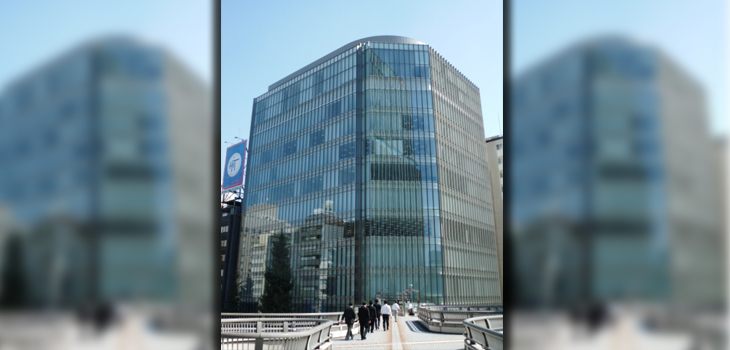
On April, 24, 2013, the company announced the official opening of its Tokyo, Japan office. Japan is the second largest spine market in the world, according to the company’s press announcement.
The Tokyo office will be headed by NuVasive’s Executive Vice President of Asia Pacific, Takaaki Tanaka. Tanaka-san has been with NuVasive since 2009. He has 20 years of experience in the spine industry.
Regulatory Approvals
Tanaka said the opening of the office was a testament to the company’s commitment to introduce the eXtreme Lateral Interbody Fusion (XLIF) procedure to the Japanese market. NuVasive recently completed several of the first XLIF procedures in key cities and markets in Japan and has received regulatory Shonin approval for several products to offer the XLIF surgical technique.
In December 2012, the company announced the Japanese approval of the CoRoent large impacted and CoRoent large tapered titanium alloy implants. The implants are used in posterior spine fusion procedures and are NuVasive’s first two interbody fusion cages to be approved in Japan.
“This marks an exciting moment in NuVasive history, ” said Alex Lukianov, chairman and CEO of NuVasive. “I am especially pleased to formally open our Tokyo office. As a company, we bring a wealth of experience in spine, with proprietary innovative procedures like XLIF and procedurally integrated solutions. Our initial reception in Japan has been exceptional, and I look forward to working with Tanaka-san and Russell Powers, our executive vice president of international, to improve spine surgery in one of the world’s largest spine markets.”
The Aging of Japan
By 2020, it is estimated that close to 50% of Japan’s population will be over the age of 50 and needing spinal implant and instrumentation technology. The Japanese spine market is estimated to be over $400 million dollars, with the same trend towards surgeons performing minimally invasive procedures.
The company now has eight international offices located in Europe, Australia, and Asia, with a presence in over 35 countries.
Author
JA
React:
Discussion
This is a fascinating development. In my practice we've seen similar outcomes with the revised protocol. The key differentiator seems to be patient selection criteria. Has anyone else noticed the correlation with BMI thresholds?
Great point. I'd push back slightly on the conclusion, the sample size in the cited study is too small to draw population-level inferences. That said, the directional signal is compelling and worth a larger RCT.
We implemented a similar approach last year. Early results are promising but we're still gathering 12-month follow-up data. Happy to share our protocol if anyone is interested.
Join the conversation
Orthopedic professionals are discussing this. Sign in and upgrade to read every comment and add your voice.