
Not all vertebral compression fractures (VCFs) are the same. For instance, some have different vertebral height profiles.
Most Innovative VCF Treatments Highlighted
2 min read Premium comments
Secondary
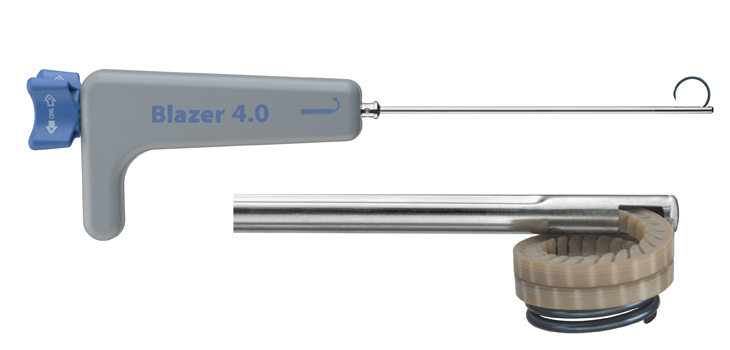
In a peer-reviewed article published in the April edition of Techniques in Regional Anesthesia and Pain Management (Volume 16/Number 2), Benvenue Medical, Inc.’s Kiva and Blazer systems were highlighted as being “among the most innovative experimental and commercial technologies available today, ” according to an April 22, 2013 announcement by the company.
Treatment Limitations
“While most studies have consistently shown percutaneous vertebroplasty and vertebral augmentation to be safe, effective, and cost efficient, they do have some limitations, and emerging percutaneous technologies for VCF treatment are being developed to overcome some of them—namely to effectively increase vertebral height, control cement delivery, conserve the native cancellous bone structure, among others, ” said Sean M. Tutton, M.D., FSIR, Professor of Radiology and Surgery at the Medical College of Wisconsin in Milwaukee and lead author of the review article. “One noteworthy and most widely published of these emerging VCF technologies is the Kiva VCF Treatment System.” In the article, according to the company, Dr. Tutton also called Blazer “perhaps the most novel cavity creation device in this review.”
The review article, entitled “Minimally invasive treatments for osteoporotic vertebral compression fractures: current concepts and state-of-the-art technologies, ” can be found on the Science Direct platform.
Article Abstract
According to the article Abstract, conservative treatment of VCFs is considered the gold standard but “has limited effectiveness after the initial 2‐3-week period when the majority of uncomplicated VCFs resolve.”
Surgical interventions are invasive and associated with morbidities, particularly in elderly patients with poor bone quality. Percutaneous techniques such as vertebroplasty and vertebral augmentation have filed the treatment gap between conservative care and surgery.
“A robust series of randomized controlled trials and case series have demonstrated effective pain reduction, function improvement, and acceptable safety with these procedures. However, limitations still exist with these techniques including the need for bipedicular access, inadequate vertebral height restoration, trabecular destruction with balloon-based techniques, inability to precisely control cement delivery, and significant radiation exposure to patients and physicians. New technologies are emerging that retain the clinical advantages of traditional percutaneous vertebroplasty and vertebral augmentation while minimizing these limitations. This review article discusses the history of minimally invasive VCF treatment, summarizes clinical evidence with these therapies, and highlights the most innovative experimental and commercial technologies available today, ” concluded the Abstract statement.
Author
React:
Discussion
This is a fascinating development. In my practice we've seen similar outcomes with the revised protocol. The key differentiator seems to be patient selection criteria. Has anyone else noticed the correlation with BMI thresholds?
Great point. I'd push back slightly on the conclusion, the sample size in the cited study is too small to draw population-level inferences. That said, the directional signal is compelling and worth a larger RCT.
We implemented a similar approach last year. Early results are promising but we're still gathering 12-month follow-up data. Happy to share our protocol if anyone is interested.
Join the conversation
Orthopedic professionals are discussing this. Sign in and upgrade to read every comment and add your voice.