
Regentis Biomaterials Ltd., a privately held company focused on developing proprietary hydrogels for tissue regeneration, is expanding its clinical study of GelrinC for cartilage repair to 12 new sites in Germany, Belgium, Poland, the Netherlands and Israel. Researchers say the study will enroll an additional 30 new patients, bringing the total number of treated patients to 53. The expanded study’s first additional patient was recently treated at the Tel Aviv Sourasky Medical Center.
Cartilage Repair Hydrogel Adds New Study Sites
1 min read Premium comments
Secondary
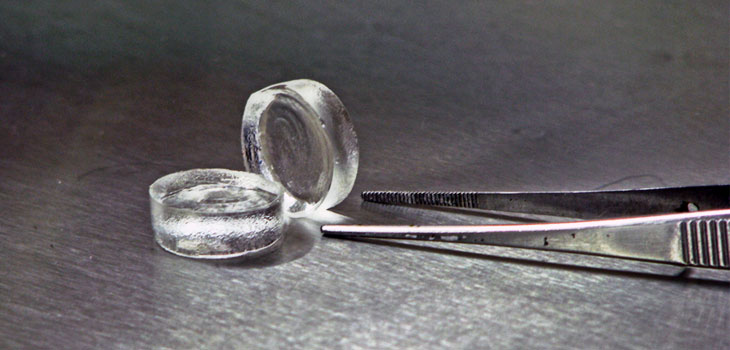
Company officials say that the biodegradable GelrinC implant helps grow hyaline-like cartilage in damaged knees by completely filling cartilage lesions with acellular material. They claim that the regenerated cartilage takes the exact form of the defect allowing a patient’s knees to function normally and pain-free. GelrinC is an off-the-shelf product that, they affirm, is cost-effective and is suitable for patients with traumatic knee injuries.
Regentis Biomaterials President and CEO Alastair Clemow, Ph.D., said, “With this expanded study, we will gain even more evidence to demonstrate GelrinC’s effectiveness, a step to making it widely available so that patients can return to an active lifestyle.”
Clemow says that the insertion of GelrinC creates an environment conducive to cartilage tissue regeneration. Doctors insert it as a liquid to fill any form of cartilage defect and it is then converted into a solid through exposure to ultraviolet light. After it is implanted, the acellular material starts to bio-degrade as it is replaced with new, high-quality cartilage.
Ron Arbel, M.D., who treated the expanded study’s patient at the Tel Aviv Sourasky Medical Center said, “The current results from the clinical study indicate that GelrinC is an effective treatment that surgeons can easily apply to patients suffering from traumatic cartilage damage. We look forward to gaining extensive data and to fully realize this treatment’s potential to restore patients’ knees.”
Author
React:
Discussion
This is a fascinating development. In my practice we've seen similar outcomes with the revised protocol. The key differentiator seems to be patient selection criteria. Has anyone else noticed the correlation with BMI thresholds?
Great point. I'd push back slightly on the conclusion, the sample size in the cited study is too small to draw population-level inferences. That said, the directional signal is compelling and worth a larger RCT.
We implemented a similar approach last year. Early results are promising but we're still gathering 12-month follow-up data. Happy to share our protocol if anyone is interested.
Join the conversation
Orthopedic professionals are discussing this. Sign in and upgrade to read every comment and add your voice.