
Surgical repairs of femurs in patients taking bisphosphonates have high complication rates, report doctors at Hospital for Special Surgery (HSS). When they compared the surgical repairs of these kinds of femur fractures in two groups of patients—those who were taking bisphosphonates and those who were not—they found that the group taking the bisphosphonates had significantly more surgical complications than the patients who were not taking the drugs.
Bisphosphonates Hinder Healing in Fracture Repairs
2 min read Premium comments
Secondary
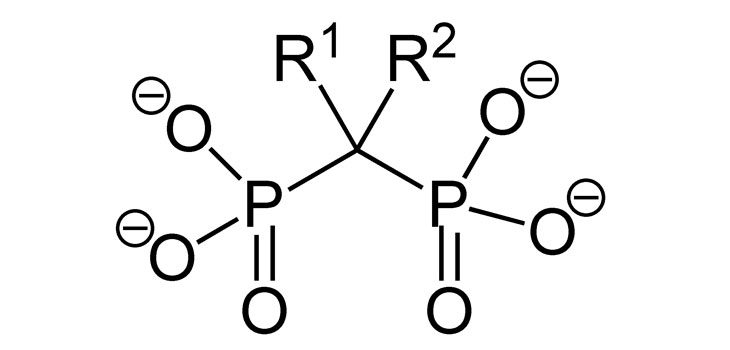
Bisphosphonates are a class of drugs used to treat osteoporosis, the disease of thinning bone structure. Doctors have observed that people taking the drugs can experience unusual fractures in the femur bone of the leg. Breaks can happen in ways in which the leg does not usually break.
In their retrospective review, researchers compared 43 patients who had been taking bisphosphonates and who experienced the kind of femoral shaft fractures associated with the drugs to a group of 20 patients with similar fractures who were not being treated with bisphosphonates. All of the patients were treated surgically to repair their fractures over a period of time from 2002 to 2008.
Before surgery, 24% of the bisphosphonate-taking group had a confirmed diagnosis of osteoporosis. In the non-bisphosphonate group, osteoporosis was diagnosed in only 5%. The patients all received similar surgical implants during the operations to repair their broken legs, but a greater number of biological adjuvant treatments had to be used to repair the breaks in the bisphosphonate group.
During the repair surgeries, 21% of the patients who had been taking bisphosphonates experienced further fracturing during the necessary bone-affecting procedures and implants of the repair operations. None of the group who had not taken the drugs did. After the surgeries, 30% of the bisphosphonate-taking group experienced postoperative plate failures. Again, none of the group who had not taken the drugs did.
The process in which the body develops new bone involves a delicate balancing act in which old bone cells are cleared away and new healthy bone cells develop. Specialized cells, called osteoclasts, break down the old bone releasing its mineral content in a process called resorption. Other specialized cells called osteoblasts develop into new bone. Old bone leaves, new bone develops in a process that maintains the structural integrity of the skeleton.
In osteoporosis, resorption continues, but not enough new bone develops. The structural integrity of the skeleton is not maintained, and bone density thins.
Bisphosphonates inhibit osteoclasts from resorption, which keeps the old bone cells from leaving. With old bone cells staying in the skeleton, the bone is less thin, but it does not have the same quality as new bone. It cannot remodel or repair micro damage in the same way.
The HSS researchers believe that their study demonstrates how bisphosphonate treatment can affect fracture repair. Despite low rates of other risk factors and ample use of biologic adjuvants, they found that patients treated with bisphosphonates who have femur fractures experience significantly more complications when surgical repair is needed.
Author
React:
Discussion
This is a fascinating development. In my practice we've seen similar outcomes with the revised protocol. The key differentiator seems to be patient selection criteria. Has anyone else noticed the correlation with BMI thresholds?
Great point. I'd push back slightly on the conclusion, the sample size in the cited study is too small to draw population-level inferences. That said, the directional signal is compelling and worth a larger RCT.
We implemented a similar approach last year. Early results are promising but we're still gathering 12-month follow-up data. Happy to share our protocol if anyone is interested.
Join the conversation
Orthopedic professionals are discussing this. Sign in and upgrade to read every comment and add your voice.