
Rochester, Minnesota-based BiosCompass, Inc. has acquired the IP (intellectual property) for Adcon Gel from AaP Implanate AG and EMCM B.V.
BiosCompass Acquires Anti-Adhesion Gel
1 min read Premium comments
Secondary
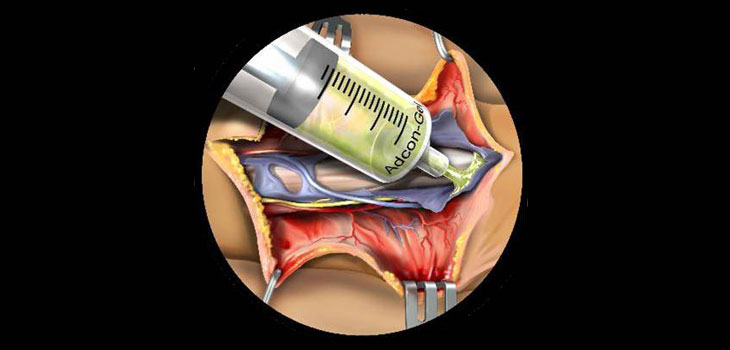
The product is a biocompatible, resorbable gel that provides a physical barrier to inter-tissue adhesions by inhibiting fibroblast migration onto and around neural or tendinous structures.
According to the company, the design of the gel is based on the concept of establishing a temporary basal lamina by combining an absorbable, collagen-derived material with a resorbable polyglycan ester. A major function of basal lamina is to provide a physical barrier to certain cells and molecules (including fibroblasts). Adcon Gel is the combination of polyglycan ester with porcine gelatine and buffered saline.
BiosCompass CEO Fred Hardwick said, “Years ago I would have given anything just to sell Adcon Gel as a commission rep in Birmingham, Alabama. Today we own it. We feel proud but humble, as if we are newly adoptive parents of a brilliantly gifted child. We are intent on relaunching Adcon Gel in the U.S. market as we continue to grow and help more surgeons and patients around the world prevent painful, debilitating post-op adhesions.”
Adcon Gel has been on the international market for over 12 years with more than 10 clinical studies done and over 300, 000 anti-adhesion procedures.
BiosCompass is privately held and has been the exclusive world distributor of the gel for the past three years with distribution in more than 30 countries. “Having acquired the Alcon Gel IP and with the world market for anti-adhesion products projected to exceed $435 million by the year 2015, BiosCompass, Inc. is now more focused to continue as the world market leader in surgical adhesion, ” stated the company press release.
Author
React:
Discussion
This is a fascinating development. In my practice we've seen similar outcomes with the revised protocol. The key differentiator seems to be patient selection criteria. Has anyone else noticed the correlation with BMI thresholds?
Great point. I'd push back slightly on the conclusion, the sample size in the cited study is too small to draw population-level inferences. That said, the directional signal is compelling and worth a larger RCT.
We implemented a similar approach last year. Early results are promising but we're still gathering 12-month follow-up data. Happy to share our protocol if anyone is interested.
Join the conversation
Orthopedic professionals are discussing this. Sign in and upgrade to read every comment and add your voice.