
Stryker Corporation has launched the Universal SMARTLock Hybrid MMF System invented by Jeffrey Marcus, M.D., Associate Vice-Chair of Surgery at Duke University.
Stryker’s Facial Trauma Device Launched
1 min read Premium comments
Secondary
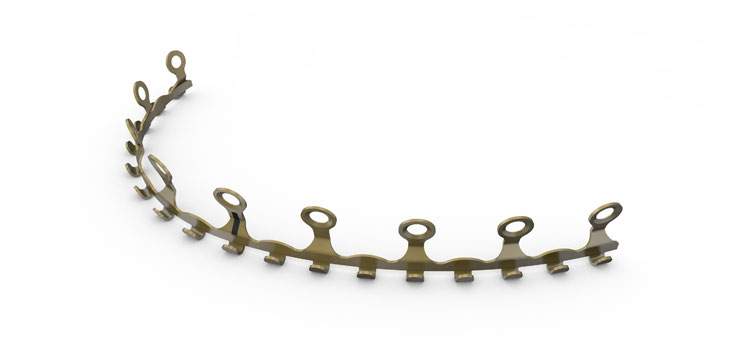
The maxillomandibular fixation (MMF) device combines elements of both arch bars and MMF screws, stated the company announcement.
With nine potential points of fixation along the plate, claims the company, posterior fixation and vector control are enhanced when compared to traditional MMF screws. The self-drilling, locking technology of the screws allows for purchase into both the bone and the plate for additional stability and also eliminates the need for interdental wiring that is required with arch bars.
The system is an “effective and technically simple process that may change the surgical management of maxillary and mandibular fixation for all surgical specialties, ” said Jairo Bastidas, DMD, Deputy Director, OMFS at Montefiore Medical Center. “Closed reduction of the jaws can be accomplished with less exposure risk to the surgeon, decreased operative time and excellent skeletal stability. The [system] is an innovation for the management of facial trauma.”
David Mercado, Stryker’s CMF (craniomaxillofacial) division general manager, said this was the most advanced tool available to treat mandibular and maxillary fractures. “It’s a patented design you will only find at Stryker.”
The device has been granted 510(k) market clearance by the FDA and is also available in international markets where it has been cleared for sales.
To view an animation of the system, click here.
Author
React:
Discussion
This is a fascinating development. In my practice we've seen similar outcomes with the revised protocol. The key differentiator seems to be patient selection criteria. Has anyone else noticed the correlation with BMI thresholds?
Great point. I'd push back slightly on the conclusion, the sample size in the cited study is too small to draw population-level inferences. That said, the directional signal is compelling and worth a larger RCT.
We implemented a similar approach last year. Early results are promising but we're still gathering 12-month follow-up data. Happy to share our protocol if anyone is interested.
Join the conversation
Orthopedic professionals are discussing this. Sign in and upgrade to read every comment and add your voice.