
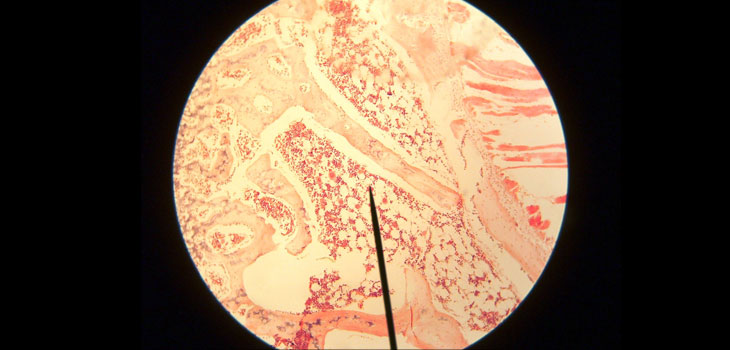
Good news for those undergoing stem cell transplants and chemotherapy is contained in research by a team at Washington University School of Medicine, St. Louis, Missouri, and reported by Medical News Today. The team found that distinct niches exist in bone marrow that nurture different types of blood stem cells. Further, each type of blood stem cell is nourished by a unique set of support cells. Stem cells in the blood are the precursors to infection-fighting white blood cells and oxygen-carrying red blood cells.
Stem Cells Own Niche in Bone Marrow
1 min read Premium comments
Secondary
“What we found was rather surprising, ” says senior author Daniel Link, M.D., the Alan A. and Edith L. Wolff Professor of Medicine. “There’s not just one niche for developing blood cells in the bone marrow. There’s a distinct niche for stem cells, which have the ability to become any blood cell in the body, and a separate niche for infection-fighting blood cells that are destined to become T cells and B cells.”
The new findings, in mice, suggest that it may be possible to therapeutically target support cells in a particular niche. A drug that nourishes support cells could encourage blood stem cells to establish themselves in the bone marrow, enabling patients who have had stem cell transplants to more quickly rebuild their immune systems.
Tumor cells are known to hide in the bone marrow. Researchers believe that a drug that disrupts the niche environment may drive cancer cells into the bloodstream, where they are more vulnerable to the damaging effects of chemotherapy.
“Our results offer hope for targeting these niches to treat specific cancers or to improve the success of stem cell transplants, ” says Link. “Already, we and others are leading clinical trials to evaluate whether it is possible to disrupt these niches in patients with leukemia or multiple myeloma.” The team reported its results in the online version of Nature.
Author
React:
Discussion
This is a fascinating development. In my practice we've seen similar outcomes with the revised protocol. The key differentiator seems to be patient selection criteria. Has anyone else noticed the correlation with BMI thresholds?
Great point. I'd push back slightly on the conclusion, the sample size in the cited study is too small to draw population-level inferences. That said, the directional signal is compelling and worth a larger RCT.
We implemented a similar approach last year. Early results are promising but we're still gathering 12-month follow-up data. Happy to share our protocol if anyone is interested.
Join the conversation
Orthopedic professionals are discussing this. Sign in and upgrade to read every comment and add your voice.