
On March 27, 2013 K2M, Inc. announced a “major” expansion of the company’s U.S. biologics portfolio with the launch of the Venado Foam Strips and Granules Bone Graft systems.
K2M Juices Up Bio Portfolio
2 min read Premium comments
Secondary
Company President and CEO Eric Major said the launch enables the company to meet a “significant” demand from surgeons.
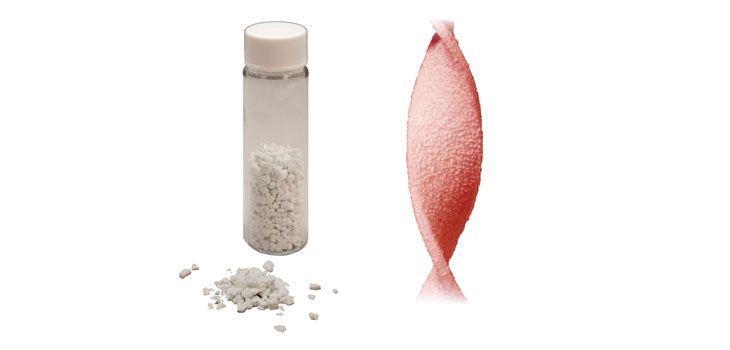
The products, according to the company, represent an entirely new product family in the company’s biologics portfolio, which already features the Vikos allograft and Vesuvius osteobiologic systems. The company says the systems are available in a variety of configurations and sizes “specifically designed to enhance bone regeneration and act as an osteogenic stimulus after spine surgery.”
Venado Foam Strip
The foam strip, according to the company’s website, is a sterile bone graft composed of purified fibrillar collagen and resorbable synthetic granules. The ceramic granules comprise 60% hydroxyapatite (HA) and 40% β-tricalcium phosphate (β-TCP) for excellent resorption characteristics. Following implantation, VENADO Foam Strips resorb and are remodeled into natural bone.
Features include:
- Compression resistant, formable, and moldable osteoconductive bone scaffold
- Highly porous structure allows bone cells to migrate into the graft
- Able to hydrate quickly in blood, saline, or water
- Composed of purified fibrillar collagen & resorbable synthetic granules
- Resorbs & remodels into natural bone
- Radiopaque HA/β-TCP granules
- Terminally sterilized by gamma irradiation
Venado Granules
Also according to the company website, the granule system is a biocompatible scaffold that quickly fills up bone voids. The ceramic granules comprise 60% hydroxyapatite (HA) and 40% β-tricalcium phosphate (β-TCP) for excellent resorption characteristics. Following implantation, the granules resorb and are remodeled into natural bone within an average of 6 to 18 months.
Features include:
- Can be easily mixed with blood and gently packed into the bone void
- 100% synthetic & biodegradable
- Composed of 60% hydroxyapatite (HA) and 40% β-tricalcium phosphate (β-TCP) for excellent resorption characteristics
- Resorption time depends on the degree of vascularization at the surgical site, the amount of grafted material, the grafting technique, and other variables related to the patient, such as age, gender, and medical history
- Safety and sterility ensured by a validated process utilizing gamma irradiation
- Granules are radiopaque for radiographic visualization
Faheem Sandhu, M.D., neurosurgeon and associate professor at Georgetown University Hospital, said Venado “provides for synthetic bone graft alternatives for hospitals and surgeons interested in a non-allograft solution to the management of complex spinal surgical issues, and these unique products complement and enhance K2M’s already comprehensive and innovative spine portfolio.”
Author
React:
Discussion
This is a fascinating development. In my practice we've seen similar outcomes with the revised protocol. The key differentiator seems to be patient selection criteria. Has anyone else noticed the correlation with BMI thresholds?
Great point. I'd push back slightly on the conclusion, the sample size in the cited study is too small to draw population-level inferences. That said, the directional signal is compelling and worth a larger RCT.
We implemented a similar approach last year. Early results are promising but we're still gathering 12-month follow-up data. Happy to share our protocol if anyone is interested.
Join the conversation
Orthopedic professionals are discussing this. Sign in and upgrade to read every comment and add your voice.